
Could your lawn use an overhaul? If you’ve got more weeds than grass and nothing you do seems to improve all the bare patches, it may be time to take things back to square one. Use this step-by-step guide to give your grassy areas a fresh start.
Diagnose the Lawn Problem
Before fixing a lawn, step back and look at the big picture. Take a moment to figure out the issue to help you avoid similar issues after replanting. For example, if grubs are the problem, you’ll need to treat for them before anything else.
If your grass is suffering because there’s too much shade in parts of your yard, you’re better off replacing lawns that require sun in those areas with low-maintenance ground covers that thrive in the shade instead. Or consider adding landscaping features like a fire pit where grass struggles to grow. That will have the added benefit of cutting down the mowing needed.
Give Your Lawn a Fresh Start
Start from scratch if more than half of your lawn is screaming for help. Spray your existing grass with a non-selective herbicide, which will kill all vegetation it touches. Make sure to read and follow all directions on the label to avoid damaging nearby non-target plants or harming wildlife.
Mow the Lawn Low
Once the herbicide has had a few days to work, mow the dead turf as short as possible. It may seem counter-intuitive that completely scalping a lawn is a step in fixing a lawn, but this low mowing will keep the dead plants from shading your new lawn too much while leaving the remains of their roots intact to prevent erosion until fresh grass can grow.
Rake, Rake, Repeat
Next step in grass replacement? Visit your local rental center and get a power rake (The Home Depot sometimes has a few available to rent in your area!). Don’t worry; it’s not as complicated as it sounds (many models are as easy to handle as the average lawnmower). Ask the clerk to show you how to adjust the blades to save yourself frustration.
Power raking will remove excess organic material and aerate the soil, allowing your new lawn to take root. You want to leave just the barest layer (about 1/4 inch) of thatch on the ground. Then rake off the remaining debris. You’ll know you’ve raked enough when you see equal amounts of bare soil and dead grass stems. Then spread a thin layer of compost over the soil and rake it in evenly.
Seed the Lawn
Now it’s time to plant new grass. If you’re using seed, follow the instructions on the package to determine how much you’ll need to use. Planting the right amount of seeds is important because your lawn could turn out thin and scraggly if you don’t use enough. To uniformly apply the seed, spread half in a north/south direction, then apply the other half in an east/west direction (you’ll be less likely to end up with bare spots).
If you’re installing sprigs or plugs, it’s just a matter of digging little holes and plopping the plants in place. Cut a small trench for sprigging and use a sod plugger for plugs. You can usually buy this where you purchased the plugs.
Water Your New Lawn Well
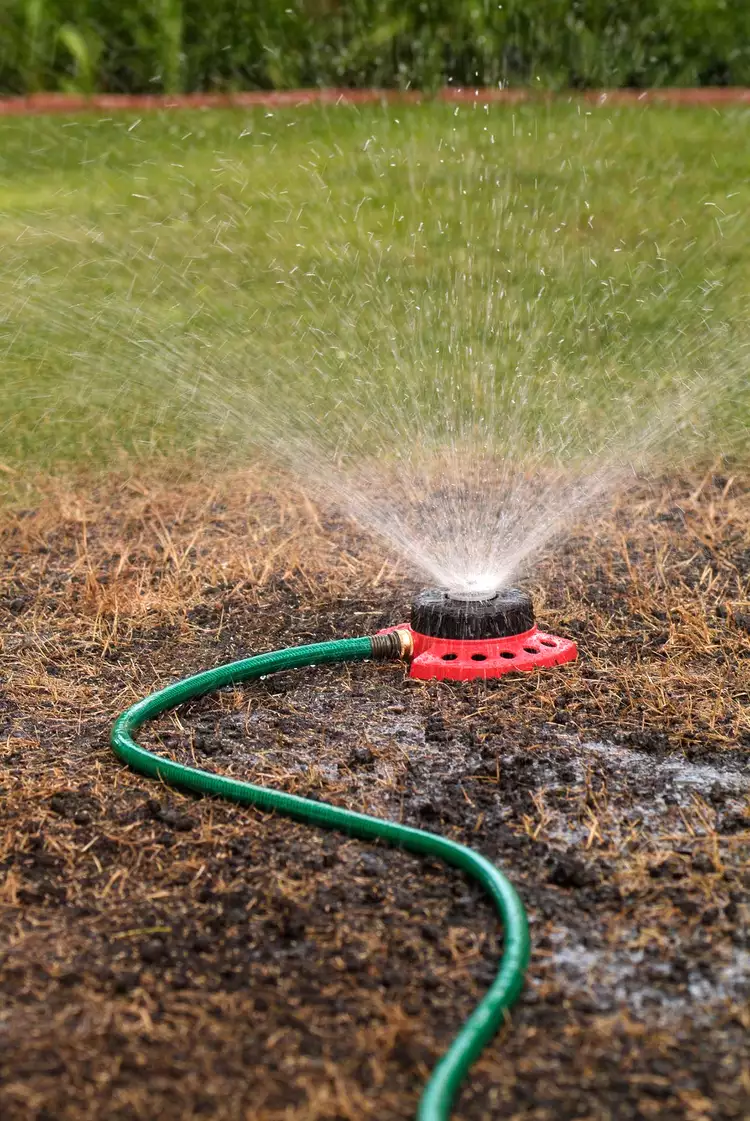
Once everything’s planted, you’ll need to keep your renovated lawn moist. For the first week or so after planting, be sure the soil doesn’t go dry. Then, after the grass is up and growing, keep the area just moist (not soggy or dry). This may mean watering a couple of times a day early on (for short, five-minute applications). Over time, you can go to a once-a-day watering for 10 or 15 minutes. It’s also crucial to water evenly, so your seed doesn’t wash away, creating bare spots.
Feeding Your Renovated Lawn
When the grass shoots are about an inch tall, you can apply a lawn fertilizer to encourage growth (you can also skip the fertilizer and try an organic lawn care option like compost). The same goes for sprigs and plugs: After seeing a couple of new shoots, it’s time for fertilizer if you want to use it. Just be sure to wait until there’s growth because you can burn roots if you fertilize too early.
Start Mowing Your New, Repaired Lawn
When the grass is about three inches tall, mow it for the first time. This will discourage weeds and encourage the spread of your new grass. This simple step makes a huge difference in the success of replacing lawns!
Be sure the mower blade is sharp the first time you mow; a dull blade could rip the seedlings from the ground. Then mow as you usually would to keep the grass at the height you want it. For the health of your turf, don’t cut off more than a third of the leaf length during any one mowing.