
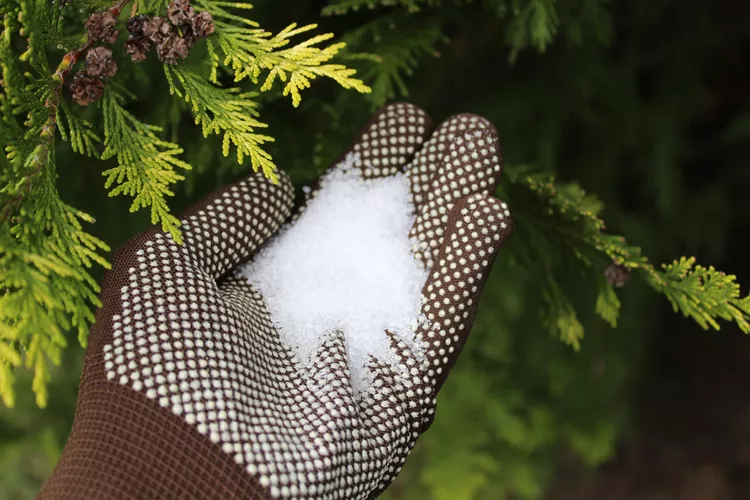
Scanning the internet, popular Epsom salt appears to be a one-stop miracle cure for the garden, touted as being able to prevent transplant shock of new plants, act as a fertilizer, and even prevent certain plant diseases. Its wide availability tempts many gardeners to use it. But is Epsom salt good for plants, and should we use it in our gardens? Here's what the research reveals.
Linda Chalker-Scott is a horticulturist and an associate professor at Washington State University.
What is Epsom Salt?
Epsom salt is a naturally occurring mineral compound of magnesium and sulfur known as magnesium sulfate. Magnesium helps form chlorophyll (a green pigment) in leaves, and when levels get low, leaves develop chlorosis, which means they turn yellow. Sulfur builds proteins and in fruit, it is important to flavor. Magnesium sulfate is found in abundance in the soils and springs near Epsom, England, now famous for its spas. Chemically, it is classed as a salt.
We know that rock salt on roadways and sidewalks can damage plants when it seeps into the soil, and most of us wouldn’t pour or spray table salt on our plants. Yet Epsom salt remedies remain popular when planting crops.
Using Epsom Salt for Plants
The idea to use Epsom salt in our gardens was likely borrowed from the farming industry. According to a study by Linda Chalker-Scott, an associate professor at Washington State University, farmers discovered in the 1940s that applications of magnesium sulfate would help “green up” leaves where the soils have become depleted of magnesium from overuse.
But applying Epsom salt to plants in your garden is likely to do much more harm than good, Chalker-Scott points out. “There are many online recipes for using Epsom salt as a fertilizer, to treat physiological problems, such as blossom end rot, and to prevent transplant shock,” she says. “None of these recipes are based on science, and their use could create soil nutrient imbalances and cause substantial injury to plants.”
According to Chalker-Scott’s research study, using excess magnesium sulfate can impact not just plants, but your soil and surrounding waterways, causing the following problems:
- salt injury to plants
- deficiencies of boron, iron, potassium, calcium, and manganese
- a reduction in nitrogen-fixing bacteria
- a release of toxic aluminum from the soil, which can poison plants and pollute waterways
Epsom Salt as Fertilizer
Epsom salt is promoted as a fertilizer because it contains magnesium and sulfate, both important nutrients supporting plant growth. Soil deficiencies of both these elements are rare in gardens, especially of sulfur. Some sandy and acidic locations can lose magnesium in heavy rains.
Likewise, when plant leaves turn yellow, you may reach for a homemade spray of Epsom salt and water as a fast fix. Many conditions can cause yellowing leaves, so Epsom salts may not help and can be harmful.
Magnesium deficiency has a particular look: The leaf veins remain green while the surrounding tissue yellows. If your plant matches that description, spraying leaves may return their lush color, but will not fix the underlying soil deficiency. If your spray is too strong, it can cause salt injury, burning the plant.
Epsom Salt for Blossom End Rot
Another popular use of Epsom salt is to prevent or cure blossom-end rot in tomato plants. Blossom-end rot is the culprit behind icky dark soft blotches on the base of tomato fruits. It usually occurs early in the season, triggered by insufficient calcium uptake.
However, Epsom salt doesn’t contain calcium or improve its uptake. Also, the condition is typically brought on by erratic watering which blocks existing calcium, so adding calcium wouldn’t address the core issue. In addition, since excess magnesium sulfate can decrease calcium availability, adding Espom salt can even make the problem worse.
Epsom Salt for Weeds
Epsom salts are sometimes recommended as a home remedy weed killer. Epsom salt can kill weeds in high concentrations, which indicates how dangerous it is for desired plants as well as unwanted ones. However, such a spray is likely to damage your soil and its organisms too, which will make it harder to grow plants you do want in the area.
Test Your Soil
Before you add Epsom salt to your garden, test your soil. Many counties’ agricultural extension offices offer this service for residents, or you can send samples to a private soil testing agency. Then follow the report’s recommendations for amending soil at the proper application rate for your space. The only reason to use Epsom salt would be if your soil has a diagnosed deficiency, which is not common within home gardens.
The best way to nurture healthy, nutrient-rich soil is with annual applications of compost. Supplementing with a slow-release organic fertilizer is usually sufficient to keep fast-growing annual plants thriving.
The bottom line, says Chalker-Scott, is, “[Epsom salt] should not be added unless a soil test indicates a deficiency in magnesium." And even then, she cautions that, "Adding too much of any nutrient can cause damage to soils and plants.”