
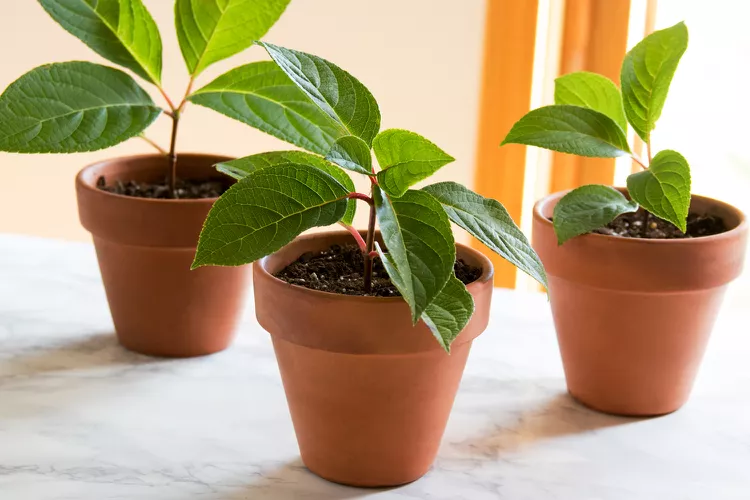
Want more plants in your garden? Um, of course! But did you know that you can quickly expand your collection by rooting stems trimmed from many of your outdoor plants? It almost seems magical how their stems, when snipped at the right time, can develop roots and become brand new plants. Plus, stem cuttings can give you full-grown plants in half the time it takes to start from seed. How to pull off this amazing propagation trick depends on the type of plant. Woody plants, such as shrubs and some perennials, root best when treated with a rooting hormone and placed into a potting mix. Many soft-stemmed plants can produce roots in just a vase of water.
When to Make Cuttings
Most stem cuttings can be rooted anytime the plants are actively growing. Coleus and geranium, for example, grow year-round (except where winters are freezing). Take cuttings from these annuals whenever you want to make more of them.
Woody plants, which can be a little trickier to root, are best harvested at specific times in their growing cycle. There are several different types of woody plant cuttings, but the steps for rooting the stems are all the same. Bottom line: It might take some experimenting to learn when your plant is best suited for cutting. Here are some of the common terms you'll see when researching plants to propagate.
Softwood cuttings: made from fresh, new growth, usually in spring or early summer. Plants such as butterfly bush, rosemary, and dogwood root well from softwood cuttings.
Greenwood cuttings: taken from young stems that are starting to mature, but still in their first year. They're usually cut in early to midsummer. Shrubs such as gardenia and boxwood tend to root well from greenwood cuttings.
Semi-hardwood cuttings: tougher and more mature. These are usually taken from midsummer to fall. Shrubs such as camellia and honeysuckle often root well from semi-hardwood cuttings.
Hardwood cuttings: taken from woody stems that have shed their leaves and gone dormant in late fall or winter. Trees and shrubs such as mock orange and viburnum often root well from hardwood cuttings.
Supplies for Cuttings
Before you start snipping, make sure you have the equipment you need to grow a new plant. Don't just grab a pair of scissors; be ready to apply rooting hormone and pot your new cuttings right away.
Sharp knife or pruning shears
Clean your cutting tools with hot, soapy water before making cuttings to eliminate introducing any diseases to the cuttings.
Containers for potting up the cuttings
Good drainage is key, so choose a container with drainage holes where excess water can trickle out.
Potting mix, perlite, vermiculite, or sand
You can often find a mix formulated for seed starting that also works well for cuttings.
Rooting hormone
Plants naturally produce a hormone called auxin that helps roots grow, and garden centers sell synthetic forms as "rooting hormone." Usually a dry powder, rooting hormone is worth the small investment because it increases your cuttings' success. It's often sold in different concentrations, and using the correct concentration recommended for your type of cutting is important.
Step 1: Cut Off a Section of Stem
Early morning is usually the best time to harvest cuttings because plants usually have the most moisture at this time. Select a section of healthy growth that's 3 to 6 inches long. Using a sharp knife or pruning shears, make a clean cut. Crushing or tearing the stem may make it more difficult for the shoot to develop new roots. Keep cuttings cool and moist until you've potted them by placing the cut ends in water or stashing your cuttings in a plastic bag with a moist paper towel wrapped around them.
Step 2: Remove the Lower Leaves
Clip off the leaves on the lower half of the shoot so you have a bare stem to insert into your potting mix. Then, if you want, dip the end of your stem in rooting hormone. This generally helps cuttings root more quickly.
Step 3: Pot Up Your Cutting
Immediately pot up your cutting in moist potting mix, sand, perlite, or vermiculite. Keep your cutting humid by loosely wrapping it in clear plastic. You can also create a makeshift greenhouse by placing the entire pot in a clear plastic bag. Place your planted cutting in bright light but avoid direct sunlight which can be too powerful. A north or east-facing window make great locations for growing cuttings. Some plants root more quickly than others, so be patient. On average, it takes a month or two for your cuttings to root and become established enough that you can plant them.
Rooting in Water
Some plants with soft stems root so easily that you can simply start them in a glass or jar of water. You can try this with many types of succulents, as well as popular bedding plants like lucky bamboo, coleus, geranium, begonia, and impatiens. Simply snip a 3- to 6-inch length of stem. Remove leaves on the lower half, and place the stem in water. Change the water every few days so it remains fresh and clear.