
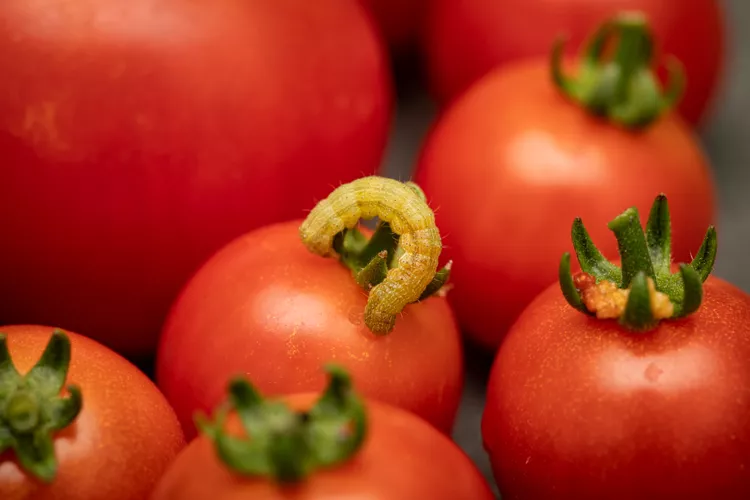
Tomato pests are a diverse group. You’ll find them creeping, crawling, and burrowing through leaves and fruit. Other pests will attack plant roots and stems. Their destruction is varied but the outcome for tomato plants is generally the same—poor plant growth and a reduced harvest.
Winning the battle against any garden pests begins with identifying what invader you’re fighting and then taking steps to protect your plants. This list of 7 common tomato pests will help you figure out which ones are sharing your vegetable patch and find the best ways to get rid of them.
Aphids
There are many species of aphids that munch on tomato plants. These tiny, soft-bodied insects range in color from pale yellow to green to black. They damage plants by piercing plant parts, causing new growth to curl and deform and blossoms to drop. Aphids rarely kill plants, but they do reduce yield and make a plant vulnerable to other pests and diseases.
What to do: The best defense against aphids is to promote natural predators, such as lady beetles and lace wing larvae. These beneficial insects feed on aphids, keeping the population in check. Promote natural predators by limiting pesticide use. Pesticides, even natural options, can harm beneficial insects as well as those that are causing trouble.
Armyworms
There are a few different types of armyworms that attack tomatoes, but in general, the small larvae have a yellow or cream stripe running down each side of their gray or black body. They damage tomatoes by nibbling little holes all over ripening fruit. They typically damage many tomatoes in a fruit cluster.
What to do: If armyworm larvae are found when they are small, they can be controlled by Bacillus thuringiensis. Early detection is key to control. Inspect plant leaves during flowering to check for armyworms.
Cutworms
There are several kinds of cutworms, but the damage they cause is similar. They kill plants by feeding on stems and roots, cutting off water and nutrients to the plant. The 2-inch-long worms form a tight C-shape when disturbed and range in color from brown to pink, green, or black. Tender young tomato seedlings are most susceptible to cutworm damage. Cutworms are rarely a problem in summer.
What to do: Watch for plants that are cut off near the ground or that are suddenly wilting (cutworms might chew on the stems but not sever the plant). As soon as damage is noticed, remove any cutworms you can find—they are most active in early morning and late evening. Place aluminum or cardboard collars around seedlings. The collars will create barriers that stop cutworm larvae from feeding on plants. In fall, till your garden bed to destroy overwintering cutworms in the soil.
Hornworms
These are some of the most easy-to-identify tomato pests, mostly because of the little "horn" on one end and their size. Mature hornworms can be 3 to 3 ½ inches long. But you may have to work to spot them because their light green color and distinctive black V-shape markings help them blend into tomato foliage. They are voracious eaters; a group of hornworms can defoliate a tomato plant in about 24 hours.
What to do: The best way to control tomato hornworms is to handpick them from the plants. Pluck the caterpillars from plants and drop them into a bucket of soapy water. Hornworms are parasitized by brachonid wasp. If you see a hornworm with what looks like white grains of rice sticking out of its back, it has been parasitized and is no longer feeding. The beneficial wasps will hatch from the white capsules and go on to parasitize other hornworms. If you find parasitized hornworms, leave them in place to allow the beneficial wasps to hatch.
Silverleaf Whiteflies
Common in tropical and subtropical environments, silverleaf whitefly damages tomato plants directly and indirectly. The tiny insects pierce plant tissue and suck plant sap causing leaf yellowing and stem dieback. The damaged plant tissue reduces fruit yield. Whiteflies damage tomato plants indirectly by spreading diseases as they move from plant to plant.
What to do: Silverleaf whitefly does not require control. Environmental conditions will soon change, and the whiteflies will find other host plants. The best defense against whitefly, and any tomato pest, is a strong, healthy tomato plant. Provide plants with 1 inch of water a week and spread a 2-inch-thick layer of mulch over the root zone to prevent moisture loss.
Stink Bugs
These shield-shaped, bright green or brown bugs pierce plant parts and suck sap from buds, blossoms, and fruit. Fruit damaged by stink bugs is mottled with small yellow spots that are soft and spongy. Stink bug damage is most prevalent in midsummer when tomato fruit is ripening.
What to do: Stink bugs are especially difficult to control. The best control is prevention. Stink bugs overwinter in wild, overgrown areas. Keep areas near your garden tidy to prevent stink bugs from setting up a cozy winter home; the population will likely be smaller the following year.
Tomato Fruit Worms
Feeding on fruit and leaves, tomato fruit worms are active throughout North America. These 1 ½-inch worm-like larvae are green-yellow to brown. Tomato fruit worms often enter green tomatoes at the stem end, causing damage and decay. Cut open damaged fruit and you might find the worm deep inside the fruit, as opposed to armyworms which are often near the surface. Fruit worms damage leaves by feeding on developing buds and occasionally burrow into the plant’s stalks.
What to do: Insecticides are rarely needed in the home garden. Egg-laying fruit worm moths will soon move to other crops and the larvae damage will dissipate. If the tomato fruit worm population is intense, effective natural insecticides include Bacillus thuringiensis, Spinosad, and pyrethrin. Choose a liquid spray version of the natural insecticide when possible—liquid sprays have better coverage than the dust-form of the insecticide. The insecticide must contact the larvae or eggs to be effective.