
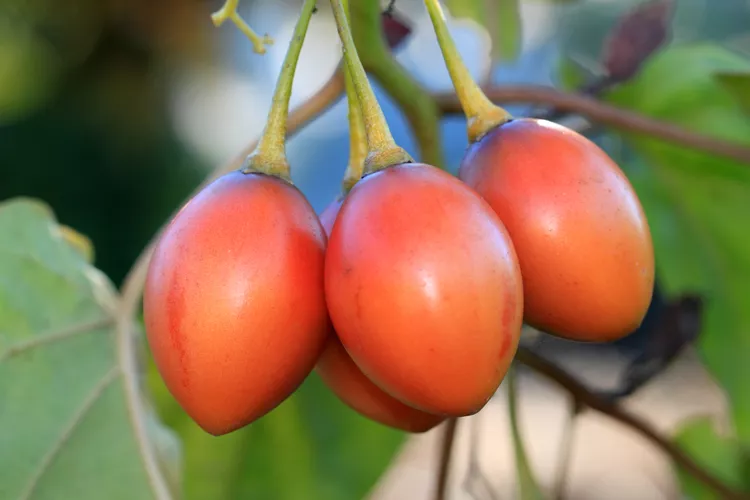
When you see a fruit similar in size to a small tomato but with orange flesh and lots of seeds, you've happened upon a tamarillo. Because the fruits closely resemble a tomato, it's also referred to as a tree tomato plant (Solanum betaceum). A native to Central and South America, this shrubby plant is part of the nightshade family like tomatoes and peppers. Here's what you need to know to grow your own tree tomato and enjoy the unique fruits.
Tree Tomato Overview
| Genus Name | Solanum betaceum (syn. Cyphomandra betacea) |
| Common Name | Tree Tomato |
| Additional Common Names | Tamarillo, Tomate de arbol |
| Plant Type | Shrub, Tree, Vegetable |
| Light | Part Sun, Sun |
| Height | 3 to 13 feet |
| Width | 3 to 6 feet |
| Foliage Color | Blue/Green |
| Special Features | Low Maintenance |
| Zones | 10, 11 |
| Propagation | Stem Cuttings |
Where to Plant Tree Tomato
In a hot climate (USDA Zones 10–11), this tough shrub or tree can be planted directly in the ground. In cooler climates, plant it in a container and bring it indoors for overwintering. Choose a location that receives 6 to 8 hours of direct sunlight. In the hottest regions, tree tomato benefits from partial shade, particularly in the afternoon.
When choosing the ideal spot, consider how much wind the area receives. Because these shrubs have a shallow root system, they need protection from strong winds that could blow over the plants.
How and When to Plant Tree Tomato
Plant tree tomatoes after the last frost in spring. Dig a hole about twice the diameter of the nursery pot and plant it at the same depth as it was in the pot. Water well after planting.
If you're planting multiple shrubs in the landscape, space them 2 to 3 feet apart, leaving 6 feet of space between rows.
Tree Tomato Care Tips
Tamarillos are large shrubs that are easy to grow as long as you provide the care they need.
Light
Tree tomatoes thrive in full sun. If you live in a tropical region or a hot climate, plant the tree tomato in partial shade. When overwintering a tree tomato indoors, place it in a sunny spot, ideally a south-facing window.
Soil and Water
Tree tomatoes do best in well-drained soil that is enriched with organic matter and slightly acidic to neutral (pH between 6.1 and 7). Provide adequate water to keep the soil moist but not soggy. Because this plant has shallow roots, it needs to be watered frequently during warm weather. The best time to water is early in the morning before the heat of the day.
When watering, keep the foliage dry; wet foliage leads to fungal diseases. Mulch around the base of the plant to retain moisture in the soil. Tree tomatoes don't do well in droughts or long periods without water.
When overwintering potted tamarillo plants indoors, water them sparingly. It goes dormant and does not require a lot of water during that period.
Temperature and Humidity
This subtropical plant grows best in warm climates. The optimum humidity for these plants is 90 to 95%. Typically, temperatures above 50 degrees are ideal. With protection, the plant can temporarily withstand temperatures as 28 degrees but it will affect its growth. If you live in a climate with cold winters, bring your plant inside during the winter.
Fertilizer
Fertilize sparingly, especially if you planted the tree tomato in rich soil with plenty of organic matter. Apply a liquid fertilizer when it is flowering or producing fruits.
Pruning
As your newly planted tamarillo starts growing, prune it to a height of 3 to 4 feet to encourage branching, using sharp pruning shears. In consecutive years, pruning helps with fruit production. Shortening any long stems and pinching back young shoots results in compact growth and encourages fruit to grow closer to the center of the plant. The recommended time to prune is just before winter.
Potting and Repotting Tree Tomato
Below USDA Zone 10, the only way to grow a tree tomato is as a potted plant. Use a container that is at least 12 inches in diameter and has large drainage holes. Fill it with a combination of high-quality potting soil and compost. Container plants dry out much faster than plants in garden soil so water often.
Move the container to a sheltered area such as a heated garage or your home for the winter.
Tree tomato plants are fast growers that soon require a larger container, one size up from its current pot. When repotting, look for wheeled containers to make relocating the plant easier.
Pests and Problems
Tamarillos are susceptible to some of the same pests you might find on your tomato plants. Be on the lookout for hornworms, which feast on tomato plants and other plants from the nightshade family. Picking off these hornworms by hand is usually sufficient, but stay vigilant as these caterpillars are known to devour plants rapidly.
Aphids and fruit flies can occasionally attack tamarillos. Treating the plant with neem oil or insecticidal soap usually gets rid of these pests. Follow the label instructions for amounts and frequency of applications.
How to Propagate Tree Tomato
Tamarillos are best grown from stem cuttings from a mature plant. As seeds do not always produce plants that are true to the parent, starting them from seed may be disappointing and not worth the effort.
In early summer, take 10-inch cuttings from one-year-old wood, cutting just below a node. Remove the leaves from the bottom half of the cuttings. Dip the cut ends in rooting hormone and insert the cuttings in small pots filled with well-draining potting mix.
Place the pots in a warm location but away from direct sunlight. Water just enough to keep the potting mix somewhat moist. Roots should start to form in 4 to 6 weeks.
How to Harvest Tree Tomatoes
Expect your tree tomato to start producing fruit in its second growing season. Similar to tomatoes, the fruits are green as they are developing, and the skin turns colors as it ripens. The skin color ranges from purple to red, orange, or yellow.
A tamarillo is ripe when the fruit gives a little when gently squeezed. Because the fruits don't last long after they are harvested, they are best when eaten within a few days.
Types of Tree Tomato
'Oratia Red'
This popular tree tomato variety reaches maturity in only 8 months. It produces large red fruits that are oval to round in shape. The fruits have a distinct acid taste and are used for eating raw and making jams and preserves.
'Rothhamer'
With fruit weighing over 3 ounces, this variety produces very large fruit for a tree tomato. The skin of the fruit is bright red and the flesh is golden-yellow. The flavor is rather sweet and the fruit is mostly eaten raw.
'Inca Gold'
The fruits of this variety are yellow and less acidic than red tree tomatoes.
'Ecuadorian Orange'
As the name indicates, this variety has orange fruit. It is large and less acidic than red-fruited types.
Tree Tomato Companion Plants
Borage
Borage is an excellent companion plant for tree tomato plantings. It helps reduce the dreaded hornworm by attracting beneficial insects. This annual herb also attracts pollinators, including bees and butterflies, to the garden. Both the leaves and flowers of the plant are edible and used as garnishes or herbs.
Basil
Basil, a familiar culinary herb, adds fragrant foliage to the garden. When planted near tree tomato plants, it repels thrips and hornworms. With many varieties of basil, growing from 18 inches to 4 feet tall, there's a basil suitable for every garden.
Marigolds
French marigolds and their taller cousins, African marigolds, add colorful blooms and attractive foliage to the garden. These annuals have an impressive reputation for repelling a variety of pests, including whiteflies, nematodes, slugs, and snails.