
You’ve probably heard plants described as annuals and perennials in gardening. Knowing the difference between annual vs. perennial plants will help you understand how each type will behave in your garden. Specifically, you’ll understand blooming times and whether the plant will survive through winter.
When deciding between annual vs. perennial plants, both offer pros and cons you’ll want to keep in mind. (There are also biennial plants in the mix.) Then, you can more easily plan a colorful, productive garden that will look gorgeous from spring to fall, all while making the most of your gardening budget.
What is an annual?
All plants have a life cycle from when a seed sprouts to when the plant dies. When a plant is described as an annual, it grows from seed, blooms, makes more seeds, and dies all within a year. You can save seeds for replanting. The baby plants may not look exactly like the parent plant, but that’s part of the fun.
Annuals vs. perennials are relatively inexpensive. They give you a lot of flower power for your money, and many bloom almost constantly until winter. Most are low-maintenance, self-cleaning plants, which means they drop their flowers naturally when the blooms finish. Other annuals need to be deadheaded to encourage the flowers to keep coming. When annuals die, you only need to pull them up and compost them.
What is a perennial plant?
Perennials live for more than one growing season. Unlike annuals, perennial plants go dormant in the winter and return the following year. Some perennial plants, like peonies, can be long-lived, returning for decades. Different perennial plants bloom at other times of the year, so you might get flowers in the spring, summer, fall, or even winter. However, you usually won’t have flowers throughout the entire growing season. Perennials don’t rebloom as often as annuals, either.
Perennial roots can survive the winter where they’re hardy. However, depending on where you live, you may need to mulch or otherwise protect them from freezing weather. Some perennials may need to be dug up and stored. Dahlias, for example, are considered perennials and can remain in the ground in regions with mild winters. But in cold winter areas, the tubers should be lifted and stored where the temperature stays above freezing.
Popular perennials include phlox, poppies, daylilies, Shasta daisies, and coneflowers, but not all are flowering plants. They can be vegetables and herbs like asparagus, rhubarb, mint, parsley, and sweet potatoes. Apples, figs, and blackberries are a few perennial fruits. Trees and shrubs are woody perennials, unlike herbaceous perennials with green, flexible stems and few or no woody parts.
What is a biennial?
Biennials finish their life cycle in just two years. They produce foliage the first year, waiting to bloom until the second year. After that, the original plant dies. Biennials include foxgloves, hollyhocks, pansies, sweet William Dianthus, and forget-me-not. Like annuals, some biennials self-sow, so it can seem like they keep returning year after year.
What should I grow: annual vs. perennial
Annuals are the top choice when you’re looking for instant gratification. They grow quickly from seeds or transplants to fill up containers or beds with color. However, you’ll need to replace them every year.
Perennials usually cost more up-front than annuals. But perennials reliably return each year, making up for their initial cost in the long run. These plants are often tricky or slow to grow from seeds, so most gardeners buy them as small plants or get them from a friend or neighbor who’s dividing their plants. When your perennial plants mature in a year or two, you can divide them to fill your garden without spending more money.
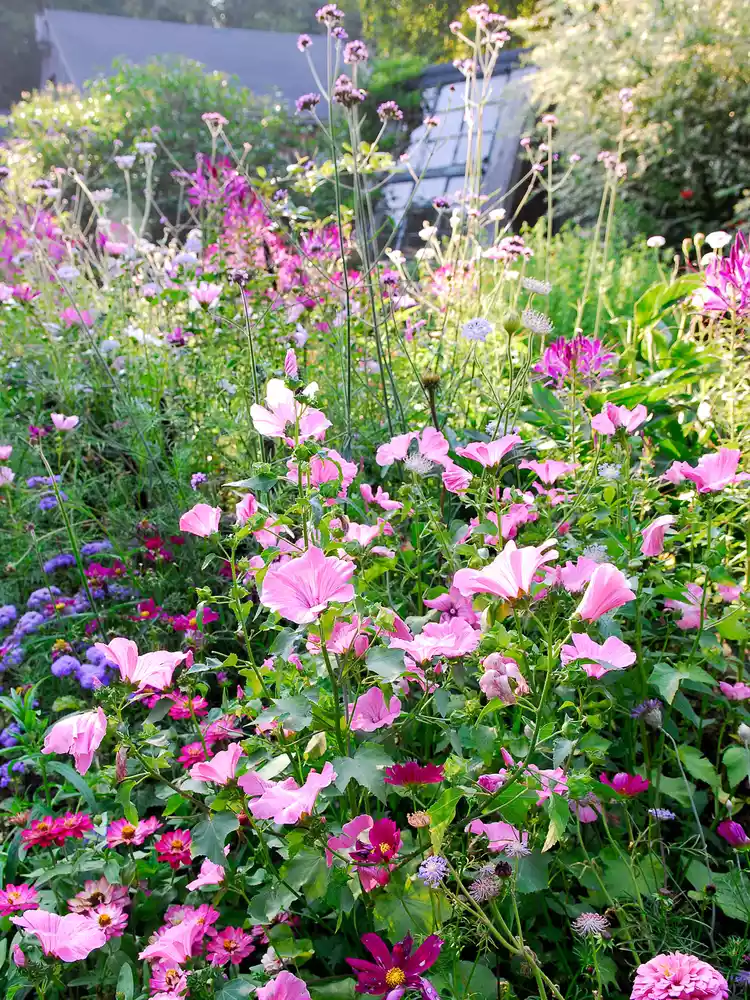
Mix annuals and perennials in your beds, borders, and containers for a gorgeous garden that will look colorful throughout the growing season. Read plant tags and labels to know when your perennials flower so you can plant them for staggered bloom times. Consider where you put your perennials, too, because they won’t be pulled up and discarded yearly, like annuals.
Annuals will flower almost constantly while perennials go in and out of flower so that you can plant for an ongoing display of different colors, shapes, and textures. If your perennials finish blooming, or even before they start, tuck annuals around them to fill in any gaps. Just be sure to combine plants with the same light and water needs. Shade-loving annual impatiens, for example, won’t last long beside perennial sun-lovers like coneflowers.