
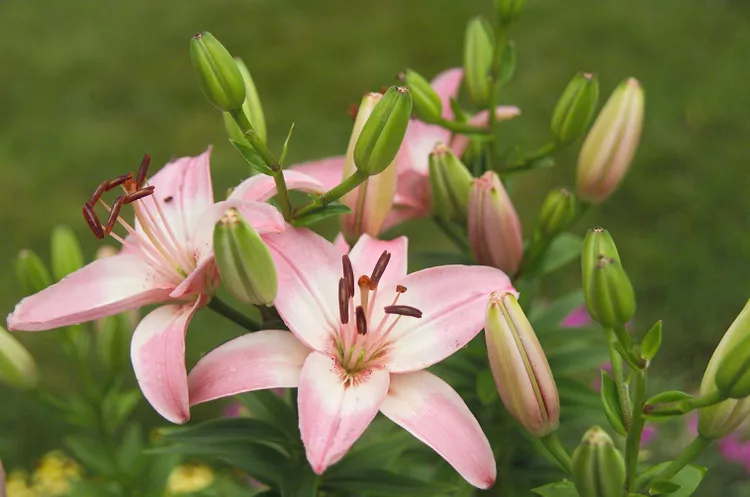
After growing big, beautiful flowers from lily bulbs, you may be wondering, are lilies perennials or are they one-and-done bulbs that won‘t come back after the winter? The answer depends on first making sure you have “true” lilies and then determining the hardiness of the type of lily you have. Here‘s how to figure out whether your lilies are perennials.
Identifying True Lilies
Many plants have "lily" in their name, such as daylily, calla lily, canna lily, water lily, but aren't actually true lilies. All true lilies belong to the genus Lilium. There are many types of lilies in this genus, and they all have large scaly yellow or white bulbs. A single stem with narrow leaves grows from the bulb. The flower buds open first on the lower part of the stem, and each flower has six anthers and six petals.
The North American Lily Society classifies true lilies into nine divisions or categories based on their traits, including how they grow and their flower shape. Many lilies are hybrids, including Asiatic hybrids, Oriental hybrids, and Trumpet hybrids. The Easter lily is also a popular type of true lily. While the winter hardiness of these different types of true lilies can vary, all of these lilies are perennials when they are grown in the correct garden conditions and hardiness zones.
Perennial Lily Hardiness
True lilies come back year after year as long as they are appropriately cared for. Perennial lilies generally grow well in USDA Hardiness Zones 4-9.
Zone 4 has a cold climate with low temperatures ranging from -30°F to -20°F. Some of the states in Hardiness Zone 4 include Montana, North Dakota, South Dakota, Minnesota, and Wisconsin, as well as the northeastern states of New Hampshire, Maine, Vermont, and northern New York.
Zone 9 is warmer, but it still has low temperatures ranging from 20°F to 30°F and comprises California, parts of Oregon and Washington, and most of the southern states, including Arizona, Texas, Louisiana, Mississippi, Alabama, and Florida.
Protecting Lilies in Winter
Lilies can handle below-freezing temperatures in the garden, but if you live in a colder region than Zone 4, the plants may need winter protection. You can either add a thick layer of mulch over the bulbs or dig up the bulbs in fall before the ground freezes. Follow these steps to lift and store lily bulbs for replanting in the spring:
- Use a spade or garden fork to dig up the bulbs carefully.
- Brush excess soil off the roots.
- Place the bulbs on a layer of newspaper or cardboard in a warm, dry place so they can dry—typically for about a week.
- Check for any mold and discard bulbs that don’t look healthy.
- Store the bulbs in peat moss or sawdust inside a cardboard box in a cool, dry location.
- Some gardeners dust the bulbs with a fungicide, such as garden sulfur, to help prevent mold or rot during storage.
- Replant the lily bulbs in spring once the ground has thawed.
What to Do with Lilies in Pots for Winter
Have potted lilies? Plants that grow in pots are more susceptible to colder temperatures than those in the ground. However, growing lilies in containers means you can easily change locations when needed. Move a potted lily to a dry, protected area away from frost and cold temperatures, such as a garage, basement, or shed; even a covered porch can suffice. Make sure the bulbs don't dry out completely by checking the soil moisture periodically. If you notice it’s beginning to dry, water the soil lightly.
If you keep potted lilies outside for winter, provide some insulation such as a layer of bubble wrap or straw to protect the soil and the bulbs from freeze/thaw cycles.
Lily Care Tips
Lilies are perennials in that they have the ability to grow back each spring from their bulbs without needing to be replanted. However, they do need the correct care to continue growing and blooming through the years. These tips will help keep your lilies happy and healthy.
- Plant lilies in an area where they receive sufficient sun, typically at least a half day of sunlight. If you live in an area with intense heat, lilies like partial shade in the afternoons.
- Plant lilies in high-quality soil with plenty of organic matter for strong roots. Amended soil retains moisture, so you don’t have to water as frequently.
- Lilies like moist soil but not soggy soil, so don't overwater.
- When you plant lily bulbs, space them 8-12 inches apart to provide ample space for the plants to grow and thrive.