
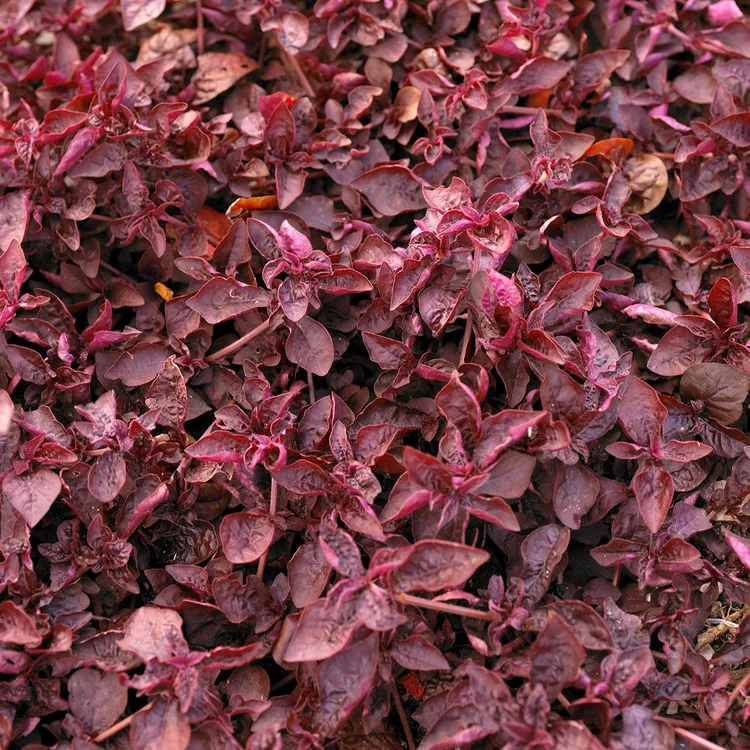
Joseph's coat doesn't have the most interesting or showy blooms, but the plants easily make up for it with their stunning, jewel-tone leaves. Joseph's coat plants make a wonderful accent in any garden setting and can work well as showy houseplants. With several hundred species available, these plants offer many different leaf shapes, sizes, and textures. Plant them in full sun for the best and brightest foliage colors.
Gardeners have long grown foliage plants, such as coleus, to add a splash of color without having to worry about blooms, but sometimes coleus can grow a little too large in the summer. If this is the case for you, give Joseph's coat a try. These plants come in different sizes and with a variety of leaf shapes—some with thin and narrow leaves and others that are wide and oval. Others still have unique crinkled foliage, and some have multicolored leaves.
Joseph's Coat Overview
| Genus Name | Alternanthera |
| Common Name | Joseph's Coat |
| Plant Type | Annual, Houseplant, Perennial |
| Light | Part Sun, Sun |
| Height | 6 to 12 inches |
| Width | 6 to 24 inches |
| Foliage Color | Purple/Burgundy |
| Season Features | Colorful Fall Foliage |
| Special Features | Good for Containers, Low Maintenance |
| Zones | 10, 11 |
| Propagation | Seed, Stem Cuttings |
Where to Plant Joseph's Coat
In most gardening zones, gardeners grow Joseph's coat as an annual. It grows as a perennial only in Zones 10 and 11. A full-sun location is preferred to bring out the colors in the foliage.
Small-leaf varieties work well at the edges of garden beds, and they can be trained into small formal hedges, making them great for colorful knot gardens. Large-leaf plant varieties are perfect for the middle of borders, and some have looser habits that work well, mingling with other plants. Some tiny types also make great additions to terrariums and fairy gardens, as they can be trimmed and maintained at a miniature scale.
How and When to Plant Joseph's Coat
The best time to set out Joseph's coat plants is in April or May, although they can be planted later with some success. After the last frost in spring, set out nursery-grown plants spaced 12 to 18 inches apart in well-draining soil with added compost. Dig a hole large enough for the root ball and at the same depth as the nursery container. Using your hands, loosen the roots if crowded in the container. Settle the plant in the hole and backfill with the amended garden soil. Water the plant deeply to eliminate any air pockets.
Within its hardiness zones, Joseph's coat can also be grown from tubers planted 4 inches deep in well-draining soil in the fall. Mark the location because you won't see new growth until spring.
Joseph's Coat Care Tips
This charming foliage plant puts on quite a display of color with very little input and doesn't require much maintenance.
Light
To get the brightest colors out of your Joseph's coat plants, plant them in full sun. Indoors, give them a bright window with as much direct light as possible. In part shade, the colors may come across as more muted, and the habit of the plants can get a little lanky.
Soil and Water
When planting Joseph's coat plants in the ground as bedding plants, place them in well-drained soil. Joseph's coat plants don't like standing water but enjoy consistent moisture. Once they are dry, they are quick to wilt, but they pop back up when they receive some water.
Temperature and Humidity
Joseph's coat is native to warm, humid areas of Asia and South America, so it welcomes warmth and humidity. It grows best in temperatures between 65°F and 75°F in moist, not wet, soil.
Indoors, keep Joseph's coat in a warm, sunny room and mist it regularly. Alternatively, fill a saucer with pebbles and water and place the plant on top of it.
Fertilizer
When Joseph's coat is planted in a full-sun location in rich, well-draining soil, it doesn't need fertilizer. In all other cases, apply a mild liquid fertilizer, such as fish emulsion, every couple of months during the growing season. For the amount to use, follow product label directions.
Pruning
If the plants become loose in habit, they are amenable to pinching and shearing to keep them groomed and tidy.
Potting and Repotting Joseph's Coat
All of the varied types of Joseph's coat work well in containers, both inside and out. If you plan to use them in pots, use a well-drained, general-purpose potting mix with a slow-release fertilizer. Select a container with good drainage that is about 2 inches larger in diameter than your nursery pot.
Pests and Problems
In the garden, slugs and caterpillars may show up on your plants. Just pluck them off by hand. Joseph's coat can be infested by spider mites or aphids when grown outside or inside. Apply insecticidal soap to the plant as soon as you see the hungry pests.
How to Propagate Joseph's Coat
To propagate by stem cuttings, snip a 6-inch piece from the end of a stem of an existing plant and strip the leaves from the bottom half. Plant it in moist sand or peat with at least one set of leaves above the soil line or drop it in a glass and watch for the roots to grow; then plant it in moist sand or peat. Set out the seedlings after the last frost of spring.
If you prefer to grow from seed, start in late winter or very early spring. Press each seed 1/8 inch into seed-starting mix in a small pot and water the pot. If you keep the seeds in a warm room and mist them to keep the humidity high, they should germinate within two weeks.
Types of Joseph's Coat
Joseph's Coat
Alternanthera ficoidea bears purplish foliage on a low spreading plant perfect for containers.
'Gail's Choice' Joseph's Coat
Alternanthera 'Gail's Choice' offers dark purple-red foliage on an upright plant that can reach 2 feet tall.
Joseph's Coat Companion Plants
Angelonia
Angelonia is also called summer snapdragon, and once you get a good look at it, you'll know why. It has salvia-like flower spires that reach 1–2 feet high, but they're studded with fascinating snapdragon-like flowers with beautiful colorations in purple, white, or pink. It's the perfect plant for adding bright color to hot, sunny spaces. This tough plant blooms all summer long with spirelike spikes of blooms. While all varieties are beautiful, keep an eye out for the sweetly scented selections. While most gardeners treat angelonia as an annual, it is a tough perennial in Zones 9-10. If you have a bright, sunny spot indoors, you can keep it flowering all winter.
Dusty Miller
Dusty miller is a favorite because it looks good with everything. The silvery-white color is a great foil for any type of garden blossom, and the fine-textured foliage creates a beautiful contrast against other green foliage. Dusty miller has earned its place in the garden because it's delightfully easy to grow, withstanding heat and drought like a champion.
Fountaingrass
Like many grasses, fountaingrass is spectacular when backlit by the rising or setting sun. Along with its exceptionally graceful spray of foliage, for which it's named, fountaingrass also sends out beautiful, fuzzy flower plumes in late summer. The white, pink, or red plumes (depending on variety) continue into fall and bring a loose, informal look to plantings. This plant self-seeds freely, sometimes to the point of becoming invasive.