• HOME
  • Container Gardens
  • Houseplants
  • Edible Gardening
  • Garden Design
  • Caring for Your Yard
  • Flowers
  • Pest & Problem Fixes
  • Trees, Shrubs & Vines
  • Landscaping
  • Garden Plans
  • Gardening Routine
  • Terms of Use
  • About Us
  • Privacy Policy
elfenmodez.topelfenmodez.top
  • HOME
  • Container Gardens
  • Houseplants
  • Edible Gardening
  • Garden Design
  • Caring for Your Yard
  • Flowers
  • Pest & Problem Fixes
  • Trees, Shrubs & Vines
  • Landscaping
  • Garden Plans
  • Gardening Routine
elfenmodez.top elfenmodez.top
elfenmodez.top » Houseplants » How to Repot Succulents to Keep Them Healthy and Thriving
Houseplants

How to Repot Succulents to Keep Them Healthy and Thriving

39.8K
3.6K
1.6K
How to Repot Succulents to Keep Them Healthy and Thriving

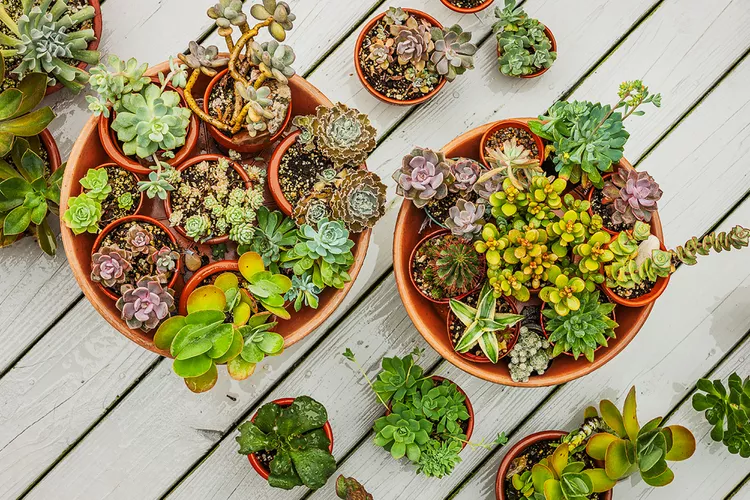
It’s a gardening basic: Plants in pots will eventually outgrow the space, which is why it's important to know how to repot succulents when they need it. Repotting every once in a while is necessary to keep plants healthy, and succulents require a little special treatment to move them into a larger container successfully. This guide explains how to know when your succulent needs a new container and includes a step-by-step guide on handling the plant so it makes the transition smoothly.

When to Repot Succulents

The best time to repot succulents is at the beginning of their growing season. Depending on the type of succulent, the growing season begins in the early spring or early fall. Don’t repot a succulent when it’s dormant. A dormant succulent is resting up for the return of its growing season. You may harm it by repotting it mid-nap.

Succulents that go dormant in the winter include sedum, echeveria, kalanchoe, and agave. They are best repotted in the spring. Succulents that go dormant in the summer include aloe, aeonium, haworthia, and senecio, so they are best repotted in the fall.

Don’t repot a succulent that’s blooming, either. Disturbing it will interrupt the blooming process. Repotting a succulent may even make the blooms fall off the plant prematurely. Let those flowers bloom and fade before moving the succulent into a new pot.

Signs a Succulent Needs Repotting

These are signs that you need to move your succulent plant to a new, larger pot.

Growth has slowed down or stopped. If your succulent appears to have stopped growing even though you gave it the right amounts of sun and water, it may be because it’s in a too-small pot of worn-out soil. A larger pot with fresh soil provides nutrition for the succulent and room for its roots to grow.

Water drains from the pot faster than it used to. This could mean the succulent is rootbound, and little soil remains in the pot to hold water. The old pot may be full of roots that have displaced the soil.

You can see roots growing out of the pot. If you see roots on the surface of the potting soil or poking out of the drainage hole at the bottom of the pot, the succulent has outgrown its pot and needs a larger one to keep growing.

You just bought it. New succulents sometimes come in too-small pots full of tired potting mix. Many nurseries use potting mixes that are heavy with peat moss to lighten the shipping weight of plants. Peat isn’t the best growing medium for succulents. Put your new succulent in a new pot with a high-quality, well-draining succulent mix.

It has been in the same pot for more than five years. Succulents should be repotted every two or three years, depending on the variety and growth rate. Even if you see no other signs indicating a succulent needs repotting, put your plant in a pot of new, fresh soil. You’ll give the succulent a burst of nutrients to fuel its growth for a few more seasons.

Steps for Repotting Succulents

Here’s how to repot your succulent when the time comes:

  1. Choose a new pot that is at least 2 inches wider and 2 to 3 inches deeper than the diameter of the succulent.
  2. Fill the new pot ¾ full with a potting mix made especially for succulents or cacti. You can make your own potting medium by mixing equal parts of compost, coir, and perlite.
  3. Remove your succulent from its current pot, and gently loosen the roots with your fingers. Lightly brush the old soil off the plant roots.
  4. Place the plant on top of the soil in the new pot and cover the roots completely with fresh potting mix. Don’t cover any of the leaves with soil or allow them to touch the soil lest they rot.
  5. Lightly pat down the soil mix to stabilize the succulent in its new pot.

Caring for Succulents After Repotting

After repotting a succulent, give it some special attention.

  • Water the newly replanted succulents lightly a day after transplanting them.
  • Keep them in a shady spot while they adjust to the new container and growing conditions.
  • Wait a few weeks before fertilizing the plant. You want the succulent to put its energy into adapting to its new pot, not putting out new growth.

Frequently Asked Questions

  • Can repotting succulents cause them to die?

    No matter how careful you are, repotting a succulent damages the root system, which causes transplant shock. Signs of transplant shock include yellowing or dropping leaves and a limp, weak look to the entire plant. Most succulents recover within two weeks, but it's possible that repotting will kill an overly stressed succulent.

  • What kind of potting soil do succulents need?

    Succulents need loose potting mix with a high ratio of perlite and pumice to organic matter. The goal is a mix that allows for fast drainage. Soil that holds water and keeps roots wet harms succulents; these drought-loving plants don’t need consistent moisture. Always use a potting mixture formulated for cacti and succulents.

  • Can you grow succulents from seeds?

    Yes, and now that succulents are trendy, seeds for even rare types are available from online distributors. Growing succulents from seeds is similar to growing most plants from seeds. A critical factor is to use soil that is half potting soil and half sand, pumice, or perlite.

Related Posts

41.6K
2.9K
990

Can You Eat Ornamental Sweet Potato Vines? Here’s What to Know

33.7K
1.7K
843

9 Dish Garden Designs That Will Bring the Outdoors In

37.8K
3K
1.2K

6 Beginner Lawn Care Mistakes that Keep Lush Grass from Growing

16.4K
985
462

6 Little-Known Camellia Facts Explain Why This Shrub Is So Popular

43.6K
3.9K
2K

How to Plant and Grow Camellia

2.7K
270
67

9 Best Large Indoor Plants for Making a Big Statement

40.8K
3.7K
918

Should You Be Using Tap Water for Houseplants? Here's What Experts Say

47.6K
1.4K
570

How to Grow a Venus Flytrap as a Houseplant

49.7K
1.5K
566

How to Grow and Care for Cordyline Plants in Your Garden or Home

41.3K
2.1K
475

How Can I Stop Woodchucks From Eating My Flowers and Plants?

34.4K
3.4K
550

How to Keep Chipmunks Out of the Garden—and Squirrels, Too

31.4K
1.9K
866

How to Get Rid of Chipmunks in Your Yard

37.9K
757
348

How to Plant and Grow Watercress

4.1K
206
30

11 Small Vegetable Garden Ideas for Maximizing Your Homegrown Harvest

8.1K
730
262

Yes, Fruit Salad Trees Exist and Here’s How to Grow Them

25.4K
254
63

How to Plant and Grow a Tree Tomato (Tamarillo)

6.8K
478
86

Your Seasonal Lawn-Care Schedule for the Midwest

7.9K
314
150

The 25 Best White Flowers for Your Garden

30.4K
2.1K
915

Birds Will Flock to Your Garden When You Plant Grasses for Wildlife 

27.5K
1.6K
461

This Front Yard Prairie Garden Requires Almost No Maintenance

Can You Eat Ornamental Sweet Potato Vines? Here’s What to Know
9 Dish Garden Designs That Will Bring the Outdoors In
6 Beginner Lawn Care Mistakes that Keep Lush Grass from Growing
6 Little-Known Camellia Facts Explain Why This Shrub Is So Popular
How to Plant and Grow Camellia
9 Best Large Indoor Plants for Making a Big Statement
Should You Be Using Tap Water for Houseplants? Here's What Experts Say
How to Grow a Venus Flytrap as a Houseplant
How to Grow and Care for Cordyline Plants in Your Garden or Home
How Can I Stop Woodchucks From Eating My Flowers and Plants?
How to Keep Chipmunks Out of the Garden—and Squirrels, Too
How to Get Rid of Chipmunks in Your Yard
How to Plant and Grow Watercress
11 Small Vegetable Garden Ideas for Maximizing Your Homegrown Harvest
Yes, Fruit Salad Trees Exist and Here’s How to Grow Them
How to Plant and Grow a Tree Tomato (Tamarillo)
Your Seasonal Lawn-Care Schedule for the Midwest
The 25 Best White Flowers for Your Garden
Birds Will Flock to Your Garden When You Plant Grasses for Wildlife 
This Front Yard Prairie Garden Requires Almost No Maintenance
elfenmodez.top ©2026
  • Terms of Use
  • About Us
  • Privacy Policy