

The federal budget deficit for the United States in June reached 0 billion, demonstrating a more favorable outcome than the anticipated 8 billion. This result indicates a significant shift from the 9 billion deficit observed in May, though it marks a decline compared to the 8 billion surplus reported in June of the preceding year. For the fiscal year to date, the cumulative deficit stands at .367 trillion, a marginal increase from .337 trillion during the identical period last year. A notable factor influencing June's figures was the negative .6 billion recorded in customs duties, primarily attributed to substantial refunds issued, which somewhat distorted the overall financial picture. While this accounting detail may have amplified the perceived size of the deficit, financial analysts contend that the underlying fiscal health remains a concern, with existing tariffs failing to alleviate the situation.
Despite the slightly better-than-expected June deficit, a comprehensive analysis reveals persistent challenges within the U.S. federal budget. The stark contrast between this June's deficit and the surplus of the previous year underscores fluctuating economic conditions and policy impacts. The year-to-date deficit's expansion further highlights the ongoing fiscal pressures. The unique impact of customs refunds on June's deficit figures emphasizes the importance of scrutinizing underlying financial components rather than focusing solely on headline numbers, especially when assessing the effectiveness of economic policies like tariffs.
In June, the U.S. federal budget recorded a deficit of 0 billion, performing better than the 8 billion deficit that was widely forecasted by financial experts. This outcome represents a notable improvement when compared to the 9 billion deficit experienced in May. However, it also signifies a reversal from the 8 billion surplus that the nation enjoyed in June of the previous year, highlighting a shift in fiscal dynamics. The cumulative deficit for the fiscal year up to June has reached .367 trillion, slightly surpassing the .337 trillion recorded during the same period in the prior year. This indicates a continuing, albeit moderate, expansion of the national debt over the past twelve months. The figures suggest a complex economic environment where monthly fluctuations can be significant, yet the overarching trend points towards sustained deficit spending.
The June deficit data provides a crucial snapshot of the U.S. government's financial standing, illustrating both immediate performance and broader fiscal trajectories. The difference between the actual and projected deficit for June, while positive, is tempered by the historical context of a surplus in the corresponding month last year. This comparison underscores the impact of various economic factors and policy decisions on national finances. The slight increase in the year-to-date deficit further emphasizes the persistent challenge of balancing government expenditures with revenues. These figures are essential for economists and policymakers to understand the current economic health and to inform future fiscal strategies. Continuous monitoring of these trends is vital for anticipating economic shifts and formulating effective responses to manage the national budget responsibly.
A significant contributing factor to June's budget deficit was the negative .6 billion reported in customs duties, a figure primarily influenced by substantial refunds issued during the month. This specific detail had the effect of making the overall deficit appear larger than it might have been under normal circumstances, prompting some discussion among economic observers. While financial analysts typically account for such variables in their projections, the scale of these refunds highlighted a particular aspect of government revenue. Despite this unique accounting anomaly, the broader consensus among economists is that the nation's financial outlook remains challenging. Furthermore, the data suggests that existing tariffs, which were implemented with the aim of bolstering domestic industries and increasing revenue, have not effectively mitigated the country's fiscal difficulties, indicating their limited impact on the overall budget deficit.
The impact of customs duties, particularly the significant refunds, offers a nuanced perspective on the federal budget's composition. While these refunds technically inflated the deficit figure for June, their nature as a one-off adjustment means they do not necessarily reflect a deterioration in fundamental economic health. However, their presence underscores the intricate relationship between international trade policies, government revenue, and fiscal stability. Economists closely scrutinize such details to differentiate between structural economic issues and temporary accounting effects. The observation that tariffs have not improved the financial situation prompts further evaluation of their efficacy as a long-term economic strategy. This analysis is critical for policymakers who must navigate a complex economic landscape, making informed decisions that consider both short-term fluctuations and long-term fiscal sustainability, especially in the context of trade policies and their broader economic repercussions.

Market Turmoil: Oil Surges Amidst Geopolitical Tensions and Inflation Fears

Technology and Market Factors Drive Nasdaq Decline

UAE Boosts Fujairah Port to Bypass Strait of Hormuz
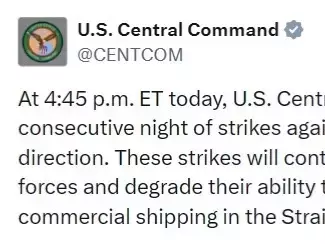
US military launches third consecutive night of strikes against Iran, impacting global oil markets

Fed Official Waller Signals Potential Rate Hike Amid Persistent Inflation Concerns

Federal Reserve Official's Insights on Economic Policy and Market Dynamics

Oil Prices Surge as Iran Blockade Imposed, Raising Geopolitical Tensions

Crude Oil Surges Amid Geopolitical Tensions, Gold Plummets

Waller's Policy Reversal and Rising Rate Hike Expectations

Nothing Phone 3: Unbeatable Deal on a Flagship Experience

Google Pixel 10 Pixelsnap Case Hits Record Low Price at Amazon

Global Smartphone Market Hits 13-Year Low, Samsung Overtakes Apple Amid Memory Crisis

The Ultimate Guide to All-in-One Computers: Top Picks for 2026

Alienware 15 (2026): Budget Gaming Laptop Review and Alternatives

Enhancing File Management: The Power of Tagging for Seamless Organization

Google Pixel 10 Series Receives Significant Price Reductions Ahead of Successor's Launch

MANGMI Unveils Game Boy-Style Android Handhelds

Square Enix's Octopath Traveler Switch 2 Editions: A Missed Opportunity for Player Loyalty

A Guide to Marriage and Divorce in Moonlight Peaks

Obtain High-Quality Pal Oil in Palworld

Compulsion Games Seeks New Collaborations Amidst Industry Upheaval

Obtaining Wheat Seeds in Palworld: A Comprehensive Guide

Obtaining Polymer in Palworld: A Comprehensive Guide

ZeniMax Online Studios' Headcount Back to 2015-2018 Levels Post-Layoffs

Sony's Digital Future: A PC Disc Drive Analogy

The Enduring Value of Hand-Drawn Animation in the Digital Age

Matt Damon's Recurring On-Screen Predicament: A Look at His 'Stranded' Roles

Live-Action Moana Remake Falters at Box Office

Nintendo Switch 2 Camera Price Slashed by Over 80% at GameStop

A Visionary's Journey: Crafting Worlds and Conquering Gaming Universes

Revisiting Assassin's Creed Black Flag: A Comparison with its Modern Remake

League of Legends Classic: A Nostalgic Return to Gaming's Golden Era

Tempest Rising's 'Veti' Faction to Receive Dedicated Single-Player Campaign as Paid Expansion, Demo Now Available

Tesla's Q2 Performance: A Resurgence Amidst Market Challenges

Tesla Announces Development of Wheelchair-Accessible Robotaxi in Texas

Mercedes-Benz Accelerates EV Production with New C-Class Assembly in Hungary

BYD Unveils New Qin Max EV with Flash Charging Technology for Young Consumers

Lexus LFA Electric Supercar Roars into the Future with Simulated V8 Sound

California's New EV Rebate Program Favors Local Manufacturers Over Tesla

1992 Porsche 911 America Roadster: A Unique Blend of Performance and Style

Slate Trucks Offer Crayola-Inspired Customization

Subaru Maintains Crosstrek Pricing for 2027, Updates Hybrid Offerings

Vimag Labs Develops Rare-Earth-Free Electric Motor

Paper Transport Initiates Tesla Semi Pilot Program in Chicago

A Glimpse Inside the 2026 Mercedes-Benz CLA250+ Interior

2026 Mercedes-Benz CLA250+: A New Era for Electric Sedans

Honda Odyssey Minivans Face Widespread Backup Camera Malfunction

2026 Mercedes-Benz CLA EV's Two-Speed Transmission Outperforms Tesla Model 3 at High Speeds

Volkswagen Group's Major Strategy Shift: A Look at the Disappearing Models

The Enduring Legacy of the 1987 Acura Integra 40 Racer


