Although most gardeners cultivate carrots in their in-ground gardens, there are some definite advantages to growing carrots in containers. Containers protect carrot roots from burrowing pests like voles, and it’s also a smart solution for small spaces and gardens with poor or rocky soil. If you’ve ever had carrots develop deformed or forked roots in a rocky garden bed, you may want to try growing these root veggies in a pot instead. Use these simple tips for growing carrots in container successfully in a garden, patio, or balcony space.
1. Choose a sunny location.
Carrots need full sun, which is at least six to eight hours of sunlight daily. One of the good things about growing carrots in containers is that you can move pots around if your growing location gets too shady as the season progresses.
2. Use a deep container.
Deep pots are essential for growing healthy carrot roots. While some carrots with short, rounded roots can be kept in shallower containers, most need at least 10- to 12-inch-deep pots.
Grow bags are a good choice for carrots as they drain well, are relatively deep, and come in an assortment of sizes. According to the rules of square-foot gardening, a single 12-inch-wide grow bag can accommodate about 16 carrot plants. Large terra-cotta or plastic pots and food-safe plastic buckets can also be used to grow carrots as long as they have drainage holes in the base.
3. Select varieties with short roots.
If you choose large planters, you can grow any type of carrot in a container garden. However, carrots with short, rounded roots are particularly easy to grow in pots. Some carrot varieties with notably short roots include ‘Adelaide’, ‘Chantenay’, and ‘Parisian’.
4. Add a well-draining potting mix.
After you select your growing container, fill it with a soil-free potting mix that’s loose, well-draining, and rich in nutrients. Garden soil is too dense for container growing, but soil-free potting mixes are just the right consistency to support developing carrot roots. If desired, blend some compost into your potting mix for added nutrients or extra sand to improve drainage.
5. Know when to plant.
Carrots are cool-season veggies that are typically planted outdoors as soon as the soil is workable or about two to three weeks before the last frost date of spring. For a continuous harvest, succession plant seeds every two to four weeks from spring until the weather gets hot in mid-summer. Carrots don’t grow well in hot weather, but seeds can be planted again in late summer to early fall for an autumn harvest.
6. Start with seeds.
Sow carrot seeds 1/4 inch deep in your pots, spacing them about 1½ to 3 inches apart. These plants don’t like to have their roots disturbed after planting, so direct sowing is recommended. To make the best use of your container space, plant seeds in a grid-like pattern and keep the soil evenly moist as the carrot seeds germinate.
7. Prevent soil crusting.
When soil dries out enough, it can develop a crust on the surface, making it much harder for carrot seeds to sprout. To avoid this, sprinkle a light layer of compost or sand over the top of your container garden after planting carrot seeds, or add a little straw mulch. Companion planting carrots with radish seeds can also keep the soil from crusting; faster-growing radishes will germinate first, breaking up any crusts for the later-sprouting carrots.
8. Thin out extra seedlings.
One of the leading reasons why carrots develop spindly roots is overcrowding, so thin out extra carrot seedlings when the plants are a few inches tall. When you’re done, carrots that develop wide, blocky roots should be spaced about 3 inches apart, while varieties with more slender roots do just fine with 2-inch spacing.
Cut off extra seedlings with scissors to avoid disturbing the remaining carrot roots, and use the seedlings you remove as microgreens on salads or sandwiches.
9. Water often.
Carrots grown in containers typically need to be watered more often than plants grown in an in-ground garden bed, although that depends on the type of pot you use. Grow bags and terra-cotta pots usually dry out faster than plastic containers, so it’s best to feel the soil before watering to ensure you don’t overdo it. A good rule of thumb is to water carrots when the top inch of soil feels dry.
10. Fertilize regularly.
Although carrots are light feeders, they are more productive with a bit of fertilizer. For best results, mix some compost into the potting mix before planting, and then fertilize the carrots approximately once every four to six weeks with a balanced, liquid, organic fertilizer. Mixing bone meal into your planting containers before sowing seeds can help carrots grow even better.
11. Harvest when the time is right.
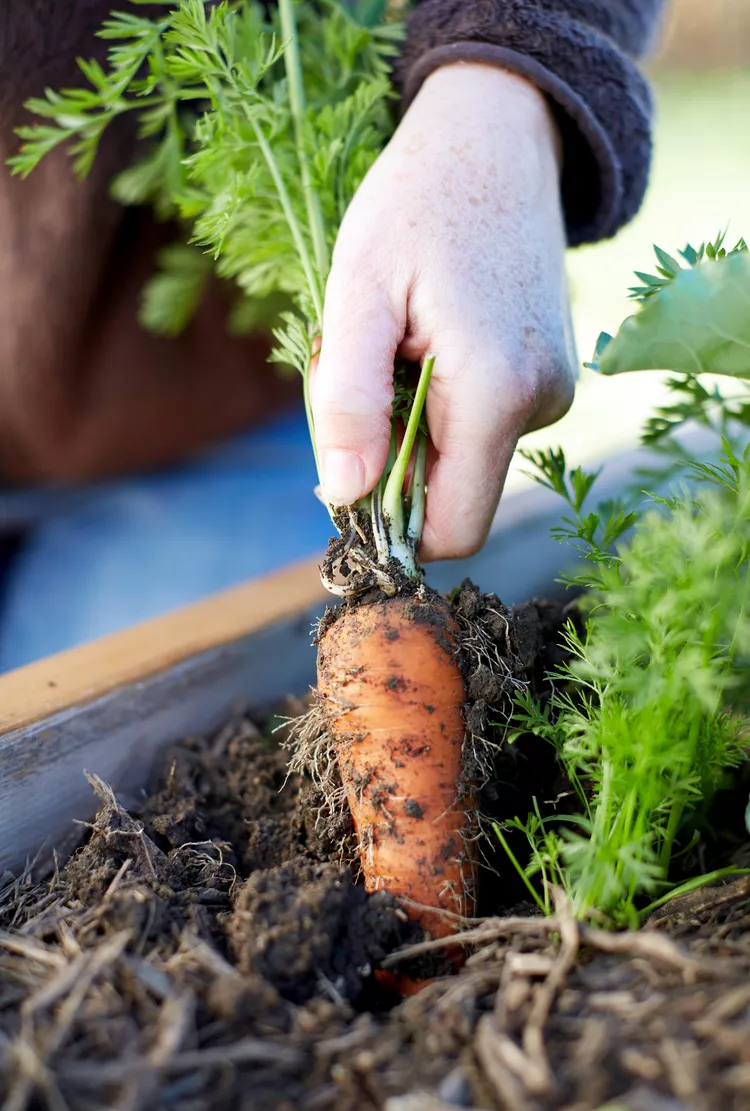
Carrots can be harvested as soon as they reach a usable size, although most varieties mature fully in about 50 to 80 days. When it’s time to harvest carrots, hand-pull the roots one at a time or harvest them all at once by dumping the growing container on a tarp. After harvesting, snip away the carrot greens and store the carrots in the fridge for a week or two, or freeze, dry, or can them.