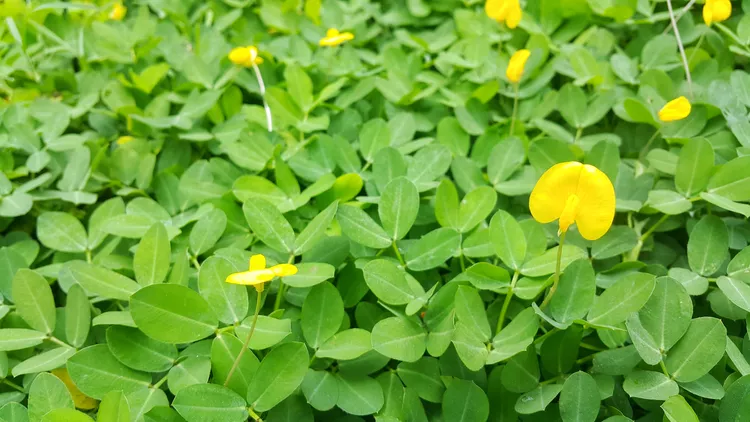
Vibrant perennial peanuts (Arachis glabrata) provide lots of color and interest to your lawn and garden when planted as a grass alternative or weed-suppressing groundcover. In addition to being drought-tolerant and resistant to pests, perennial peanuts need minimal mowing, making them a great option for hard-to-mow areas like median strips on driveways, sloped walkways, and small patches of lawn where not much else grows. Their mat-forming nature makes them ideal for stabilizing erosion-prone areas like hillsides and damp locations. They also can improve garden soil like other nitrogen-fixing legume plants.
A close relative of common peanuts, perennial peanuts don’t produce edible seeds, but their vivid, yellow flowers are tasty and have a slightly nutty flavor. Ideal for frost-free locations, perennial peanuts are a good choice if you want to liven up your garden beds or reduce turf grass. Follow this guide to plant and grow perennial peanuts in your yard.
Perennial Peanut Overview
| Genus Name | Arachis |
| Common Name | Perennial Peanut |
| Additional Common Names | Rhizoma peanut, creeping forage peanut, ornamental peanut grass, golden glory, ornamental peanut |
| Plant Type | Perennial |
| Light | Part Sun, Sun |
| Height | 6 to 18 inches |
| Width | 24 to 36 inches |
| Flower Color | Yellow |
| Foliage Color | Blue/Green |
| Season Features | Summer Bloom |
| Special Features | Low Maintenance |
| Zones | 10, 11, 8, 9 |
| Problem Solvers | Drought Tolerant, Groundcover |
Where to Plant Perennial Peanut
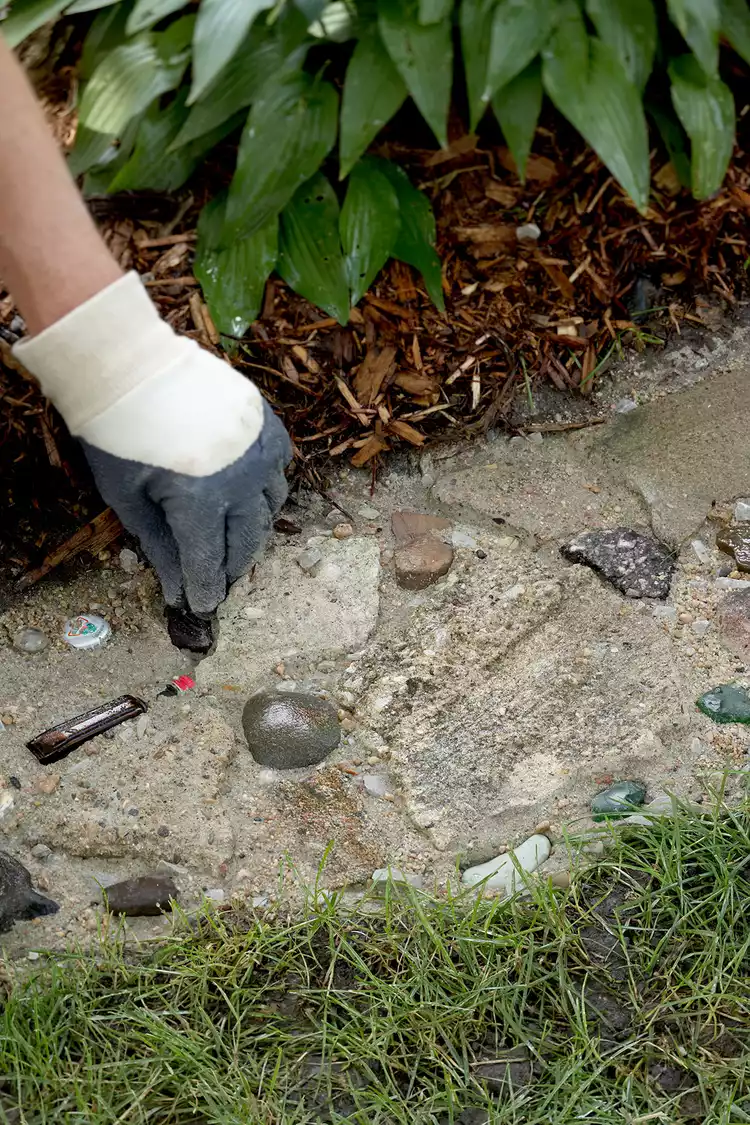
Perennial peanuts can be grown as a groundcover in garden beds for weed suppression, or you can plant them in your lawn to fill in bald spots or replace your grass lawn entirely. While perennial peanuts can handle some light foot traffic, consider adding a few stepping stones in frequently used areas to protect the plants from trampling. Perennial peanuts often don’t need to be mowed, so they are well-suited for sowing in hard-to-reach or steeply sloped areas that are otherwise difficult to maintain.
Places with nutrient-poor, sandy soils are not a problem because these peanut plants can produce their own nitrogen. Perennial peanuts can even handle higher-than-average salinity levels, so they work well in warm coastal areas.
How and When to Plant Perennial Peanut
The best time to plant perennial peanuts is when the soil is warm enough to be workable, but temperatures aren't high. Spring is usually ideal because perennial peanuts establish themselves more easily during rainy weather.
Perennial peanuts are usually planted as rhizomes, which are buried about 1 ½ to 2 inches deep in sandy soil and 1 inch deep in clay soil. If you want a solid ground covering, space plants about 2 to 3 feet apart. These plants grow vigorously, so they will fill in the bare soil in no time. Ornamental plantings of perennial peanuts can be spaced more widely apart, depending on your preference.
After sowing, water the planting area and weed it regularly so weeds don't overwhelm the new plants.
Perennial Peanut Care Tips
Hardy perennial peanuts can resist drought and pests, and pollinators love the flowers. To keep your perennial peanuts happy and healthy, follow these easy care tips.
Light
While perennial peanuts can grow in full sun to part shade, they produce fewer flowers in lower-light locations.
Soil and Water
Perennial peanuts grow best in well-drained soil, ideally sandy to sandy loam soil with a pH of 5.8 to 7.0.
After they are established, perennial peanuts are relatively drought-resistant; however, they grow better with regular watering. Aim to provide perennial peanuts with about 1 inch of water per week.
Temperature and Humidity
In frost-free areas of USDA Hardiness Zones 8b-11, perennial peanuts remain green all year round, but they drop their leaves in winter in cooler regions. They thrive in high humidity. Some reports have found that perennial peanuts can survive winters with temperatures below freezing, but these plants grow better with mild winters.
Fertilizer
Whether you grow perennial peanuts as a groundcover or lawn alternative, these plants generally don't need extra fertilizer since they are able to fix their own nitrogen.
Pruning
No pruning is necessary, but trimming around the planting area keeps it looking tidy.
Pests and Problems
Perennial peanuts are resilient and naturally resistant to most pests and plant problems, although there are few exceptions.
Slugs and snails sometimes target perennial peanut plants, leaving ragged holes in leaves or munching away on entire leaves and flowers.
To control these pests naturally, install “slug pubs” in your garden by adding a bit of old orange juice or beer to a plastic container with low sides. Check the trap every few days for slugs that have found their way in. Alternatively, place old tiles or pieces of wood in your outdoor beds and then check underneath them once a day. Slugs and snails often congregate in these spots, making it easy to collect them.
Yellowing leaves can occur due to several issues, including soil imbalances or inconsistent watering. If you see yellow leaves, consider your watering schedule and adjust it if necessary. Any pH imbalances in your soil can also make it difficult for plants to absorb nutrients, so you may want to test your soil’s pH too.
How to Propagate Perennial Peanut
Perennial peanut plants are best propagated from rhizomes when they are dormant.
- Lift an existing plant and its rhizomes from the ground.
- Cut 2-inch or larger sections of rhizomes and plant them in a prepared bed.
- Cover them with up to 2 inches of soil and keep the soil moist until the rhizomes send up shoots, which is usually in just a few weeks.
Types of Perennial Peanut
'Golden Glory’ Perennial Peanut
Arachis glabrata 'Golden Glory' can handle moist soil and shade better than other varieties of perennial peanuts, and it doesn't need mowing. However, this variety grows best with extra fertilizer applications. "Golden Glory' grows to 18 inches tall.
‘Needlepoint’ Perennial Peanut
Arachis glabrata ‘Needlepoint’ grows only 6 inches tall and is excellent for erosion control. It has fine, spear-shaped leaves that look a lot like grass.
‘Ecoturf’ Perennial Peanut
With teardrop-shaped leaves, Arachis glabrata ‘Ecoturf’ makes an attractive groundcover. To keep weeds away, mow this variety about twice a year. It grows 9-12 inches tall.
‘Waxy Leaf’ Perennial Peanut
Arachis glabrata ‘Waxy Leaf’ has slightly shiny leaves that add fun texture to landscapes, but it grows a bit taller than other perennial peanut types at 9-12 inches.
Perennial Peanut Companion Plants
Red Cluster Bottlebrush Tree
Because perennial peanuts grow best with full sun, some of their top companions are larger plants that allow sunlight to penetrate through their leaves. Bottlebrush trees (Callistemon spp.) such as 'Red Cluster' are one excellent choice as their airy nature will let sunlight reach the soil below them.
Croton
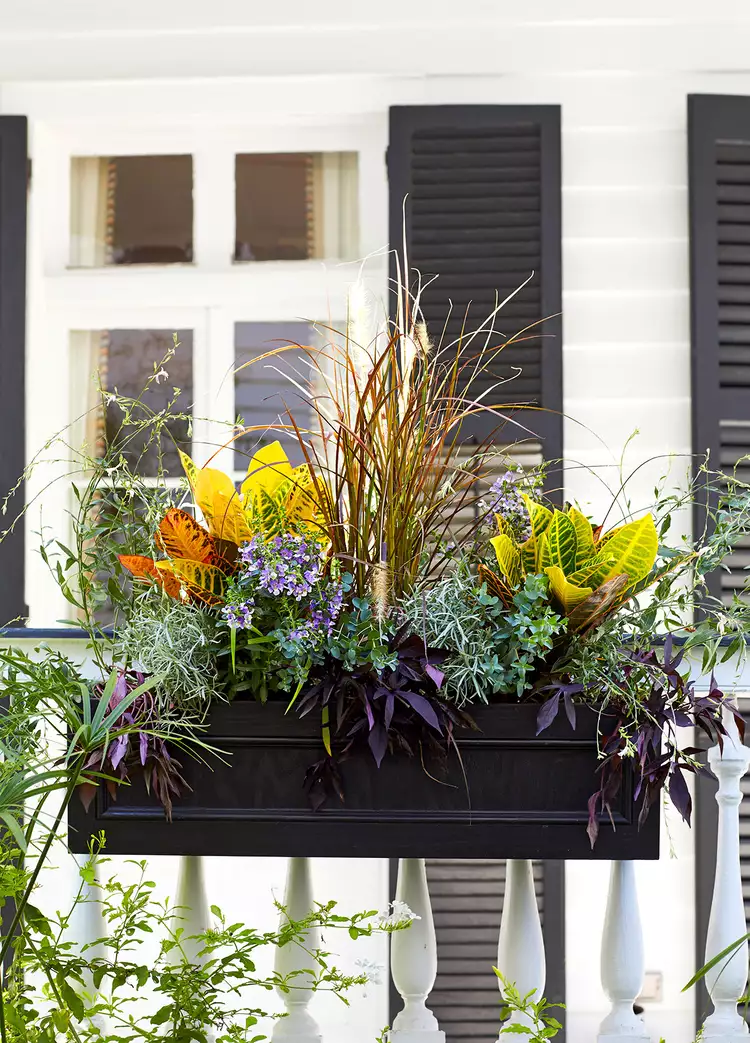
Similarly, crotons are not as densely leafed as many other ornamentals and won’t block out sunlight as much. Plus, these plants will benefit from perennial peanut’s nitrogen-fixing abilities.
Turf Grass
Turf grass and perennial peanuts can grow beautifully together as a mixed lawn. Perennial peanuts can improve the soil around your grass and fill in bare spots too.