Weeds have a publicity problem. When you consider a plant in your backyard a weed because you didn't plant it there, you may decide it should be uprooted and tossed out. But then you'd be missing out on a big opportunity: Many of those untamed plants are not only edible weeds but also delicious and healthy for you. Whether you have a large yard, a raised-bed garden, or even a simpler container garden, chances are you'll have at least a few of these common plants to choose from.
Their real issue, says forager and author Tama Matsuoka Wong, is not that they're turning up in your garden; it's that people call them "weeds" in the first place. "It's like garbage. Garbage is what we decide it is, and that's why we throw it away," says Wong. "A lot of what is and isn't a weed depends on what we value."
Edible Weeds
Purslane
This hearty plant features spoon-shaped, fleshy leaves, reddish, succulent stems, and tiny yellow flowers. You might spot it growing out of a crack in the asphalt because it's not at all picky about where it puts down roots, and it thrives in heat. It's packed with nutrients and omega-3 fatty acids, too.
Wong recommends picking just the tips of a young plant to add to a salad with feta cheese and olives. You can also steam or stir-fry the leaves but don’t overcook, or they’ll become slimy.
Scroll down to the end of this article for tips on consuming edible weeds safely.
Dandelion
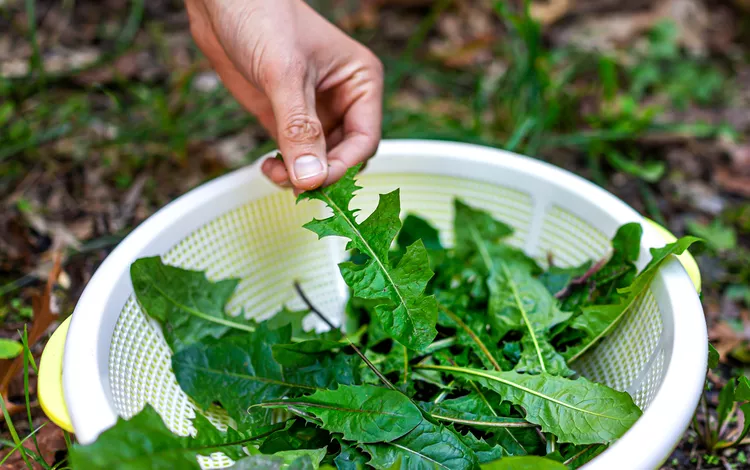
Think twice before mowing over this common lawn nuisance; it’s one of the best edible weeds, says Wong. Use the young leaves (that stick up from the center and are light green) in salads or cooked as you would spinach, as they’re a good source of vitamins C, A, and K, plus potassium.
Or pick the yellow flower, dip it in tempura batter, and fry. “Some people say these taste like popcorn,” says Wong. You can also pull up the entire plant to make a caffeine-free, chicory-like beverage from its roots.
Sourgrass
Also known as yellow woodsorrel, this native North American perennial plant isn't grass. But it's something nearly everyone can find in their backyard, says Cole Dickinson, a forager and executive chef at Layla restaurant at MacArthur Place Hotel & Spa in Sonoma, California.
Sourgrass has a lemony flavor, making them a fine choice for garnishing seafood dishes. You can also chop a few stems to add a citrus burst to ceviches.
Chickweed
With a flavor similar to parsley, this edible weed likes cool weather, so it’s best harvested in late spring and fall. It has oval-shaped leaves growing in pairs opposite each other on long stems that creep along the ground and star-like white-petaled flowers. Wield scissors to trim the tender new growth or just the top few inches of older plants, then use it any way you’d use spinach, especially to bulk up salads, says Dickinson.
Sumac
Sometimes called the “weed tree,” sumac grows across the United States and Canada (except for far north regions). The edible part of this short, sapling-like tree is its brick-red fruit clusters in the shape of a cone. (American sumac, however, is not the same thing as the Mediterranean sumac spice.)
Wong suggests using it to make an antioxidant-rich tea: Dip a cluster of the fruit in hot water until it turns pinkish-red, then strain and add a squeeze of lemon. You can also dry sumac to use for tea throughout the year.
Wild Mustard
When you bite into a bunch of flowering wild mustard, “it literally tastes like eating a spoonful of Dijon mustard,” says Dickinson. This edible weed is so hardy it can even be found in Greenland and near the North Pole.
Use its clustered, bright-yellow small flowers as garnishes, or pick the pods after the plants have gone to seed to eat as they are or pickle them. Hardcore foragers may also work with the leaves, which tend to be tough but soften with cooking and are packed with vitamins.
Galinsoga
In Central America, this plant (part of the sunflower family) is a highly sought-after gourmet food, says Wong. However, in the United States, it’s more commonly seen in large fields, popping up as a nuisance among crops rather than in gardens.
If you find galinsoga and want to harvest some to eat, don’t pull out this tall plant as you would an unwanted weed plant: Pick just the tips (it’s OK if it already has flowers, which are tiny with five white petals around a yellow center). Add to stir-fries or salads in moderation (be mindful that the leaves can be a little fuzzy, so you won’t want to eat an entire bowl of it alone).
Lambsquarters
Often found in fields, pastures, orchards, gardens, and even along the roadside, this super common edible weed has almost triangular, toothed leaves with a bluish-green tint. The biggest giveaway you’ve found lambsquarters is the powdery substance on the underside of its leaves, which disappears when you cook them. Use the leaves as you would spinach leaves; they contain a hefty dose of iron, protein, calcium, and B vitamins.
Eating Weeds Safely
Before harvesting weeds for dinner, ensure you know what’s happening with your soil. For example, soil in areas with a long industrial history (such as Brooklyn, New York) may contain a lot of heavy metals, and therefore wild plants growing in it may not be safe to eat, says Wong. This is also why you should avoid plucking edible weeds along roadsides, parking lots, or other potentially polluted ground.
If you want to begin noshing on edible weeds growing in your garden, it goes without saying to stop using herbicides and chemical fertilizers around them and then let them do their thing. “It’s not like you have to start doing something; it’s more about stopping doing things,” says Wong.
Another critical tip is not to eat anything that you’re not 100% certain of what it is, says Dickinson. Poisonous plants can look very similar to edible ones: For example, fatal hemlock can closely mimic the leaves of wild chervil (similar to parsley). Study leaf patterns and learn what to look for (the blog Hunter Angler Gardener Cook is a good resource) to feel confident in your weed identification abilities. Once you have found an edible weed, give it a quick rinse with cool water before eating to wash off any dirt on it.