How to Harvest Mint, Dry Mint, and Store Mint

40.4K
3.2K
1.2K
2025-10-19
How to Harvest Mint, Dry Mint, and Store Mint

Peppermint, spearmint, and other mints are infamous for their aggressive growth rate and they can take over culinary gardens if you’re not careful. But growing mint in pots and knowing how to harvest mint the right way can keep this fast-growing herb from spreading too quickly. Whether you plan to grow fresh mint for salads or want to dry mint for teas and spice blends, you’ll learn all you need to know about harvesting and storing mint leaves here.

When to Harvest Mint

Thanks to mint’s rapid growth rate, you won’t need to wait long to harvest your mint plants. Mint is a cut-and-come-again herb that can be harvested throughout the season, although individual plants should be at least 4 inches tall before you start gathering leaves. Young and tender mint leaves are known to have the best flavor, so start picking mint plants in spring as soon as new growth emerges, and continue harvesting through fall to keep your mint plants more manageable.

While mint leaves and stems can be picked throughout the growing season, you’ll get the best flavor if you harvest the majority of your mint in summer, right before the plant flowers. Mint leaves and stems will also taste a bit better if you pick them early in the day, before the morning dew has evaporated. Mint leaves contain the highest concentration of volatile oils at this time and their flavor will be at its peak!

How to Harvest Mint

Mint can be harvested little by little as needed for recipes, or you can harvest a larger crop of mint all at once for drying and freezing. When you're drying herbs and flowers, keep in mind that even vigorous mint plants can become stressed by overharvesting, so never harvest more than 1/3 to ½ of your plant in one go. If you do take a larger harvest of mint, water your plants deeply after harvesting and give them a few weeks to recover before harvesting again.

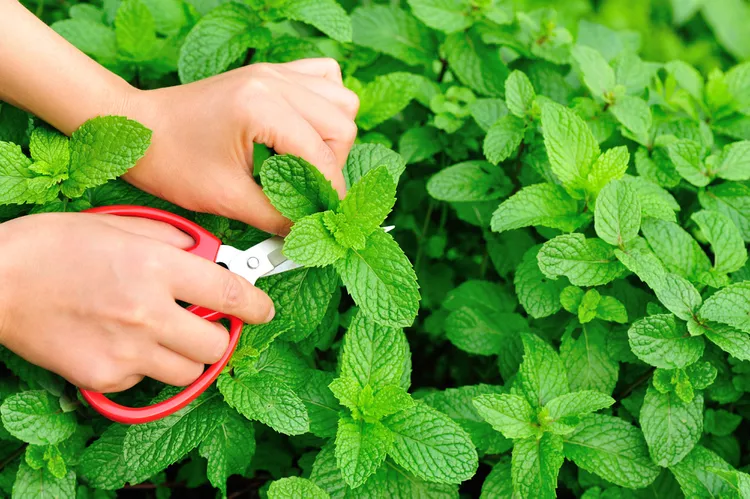
Pulling leaves off mint plants is not the best way to harvest mint as it can leave these edible plants more vulnerable to diseases and reduce branching. Instead, mint stems should be clipped off with sharp scissors or pruners below a leaf node to encourage the plant to grow more leaves. Once the stems are cut, the leaves can be separated from the stems or left on the stems for hang drying.

If you only want a small amount of mint leaves for cooking, snip off the stems you need about 1 to 2 inches above the soil line. If you want to harvest a lot of mint at once, gather a handful of mint in one hand and clip the stems off a few inches above the soil line with scissors or pruners.

Because mint grows quickly, you can usually gather a few large harvests of mint every year. Harvesting mint in mid-season before the plant flowers and again in fall before frost arrives can provide your kitchen with lots of fresh mint for eating and preserving.

How to Store Fresh Mint

Fresh mint can be stored in the fridge for a week or two by loosely wrapping cut stems in a damp paper towel and stowing them inside a zipper storage bag in the crisper drawer. Alternatively, you can place cut mint stems in a glass filled with 1 inch of water, cover the leaves and glass with a plastic baggie, and store the container in the fridge. Just remember to replace the water daily to keep your mint fresh.

For longer term storage, mint can also be flash frozen and then stored in airtight containers in the freezer. Or leaves can be chopped and frozen in ice cube trays with water or olive oil. Frozen mint should last for about 3 to 6 months, but you can preserve mint leaves even longer with dehydration.

How to Dry Mint Leaves

Mint can be dried using several different methods and the technique you choose will depending on your tastes and the equipment in your home.

For a low tech solution,
loosely bundle mint stems with a rubber band and hang them upside down in a dry, dark place with good air flow. Allow the leaves to dry for a week or two until they can be easily crumbled between your fingers. Then separate the mint leaves and stems and compost the stems.

If you have a food dehydrator, remove the mint leaves from the stems and spread the leaves out in a single layer on a dehydrator tray. Allow the leaves to dry for 2 to 4 hours at 100°F to 115°F until the
leaves are crispy, but not brown. If you don’t have a dehydrator, mint leaves can also be dried in an oven set on the lowest setting.

Once mint leaves are thoroughly dry, store the dried leaves whole in airtight containers in a dry, dark place. Adding moisture absorption packets to your storage containers can keep dried mint fresh for longer, but they’re not required. When properly stored, dried mint should stay fresh for a year or more, but it will taste best if you grind it up just before use.
Frequently Asked Questions

  • How many times can you harvest mint?

    Mint is a perennial herb that can be harvested again and again if it’s cared for properly. Small quantities of mint can be harvested throughout the season, but it’s best to limit larger harvests to 2 to 4 times per year.

  • Should I let mint flower?

    That depends. Mint leaves taste a bit different after flowering and flowering can allow certain mint plants to produce seeds and spread. However, mint flowers can attract pollinators and beneficial insects to herb gardens and help to naturally reduce garden pest problems.

  • What can I do with fresh mint leaves?

    If you have more mint that you can use right away, you can freeze or dry your extra mint for later use. Or you can use fresh mint to flavor water, hot and cold teas, desserts, and salads. Mint leaves can also be blended into various sauces, like mint pesto and mint chimichurri.

Related Article

19 Colorful Window Box Ideas to Brighten Up Your Exterior
3K
301
48

19 Colorful Window Box Ideas to Brighten Up Your Exterior

Use these window box ideas for a no-fail way to dress up your home. We share the right plant combinations to create maximum curb appeal.
Container Gardening for Beginners: 10 Must-Know Tips
46.3K
1.4K
416

Container Gardening for Beginners: 10 Must-Know Tips

Use these container gardening tips for beginners to successfully grow potted plants outdoors.
9 Colorful Plants That Will Thrive on Your Balcony
12.2K
489
58

9 Colorful Plants That Will Thrive on Your Balcony

These balcony plants adapt well to life in a container, and hold up well in the increased heat and wind of their elevated location.
How to Plant and Grow Lisianthus
2.4K
118
47

How to Plant and Grow Lisianthus

Lisianthus flowers come in various romantic colors and add an elegant touch to any garden or floral arrangement.
How to Plant and Grow a Christmas Fern
10.1K
606
254

How to Plant and Grow a Christmas Fern

Learn how to grow Christmas fern, an evergreen perennial that is leafy and green in the deepest winter.
How to Plant and Grow Perennial Peanut
22.3K
1.6K
420

How to Plant and Grow Perennial Peanut

Learn how to grow perennial peanuts for erosion control, weed suppression, and a low maintenance lawn.
How to Prune Roses for Healthier Plants and More Flowers
7.3K
220
105

How to Prune Roses for Healthier Plants and More Flowers

Learn how to prune roses properly so you can keep your rose shrubs, climbers, heirlooms, or modern hybrid roses looking their best through the years.
Garden Privacy Ideas that Incorporate Landscaping and Hardscaping
10.1K
101
43

Garden Privacy Ideas that Incorporate Landscaping and Hardscaping

Check out these garden privacy ideas that include landscaping and hardscaping for creating a beautiful and private oasis in your yard.
How to Prune Basil to Boost Your Harvest
35.5K
354
169

How to Prune Basil to Boost Your Harvest

Learn how to prune basil correctly to delay flowering, encourage more leaves to grow, and take cuttings.
How to Plant and Grow Pineapple Sage
9.5K
569
91

How to Plant and Grow Pineapple Sage

Read this guide to learn how to plant and grow pineapple sage in herb gardens or pollinator habitats!
13 Fast-Growing Trees for a Privacy Screen in Your Yard
42.4K
423
59

13 Fast-Growing Trees for a Privacy Screen in Your Yard

Plant these fast-growing trees and enjoy the beauty—and privacy—of a lush living fence in just a few years.
How to Plant and Grow Purple Hyacinth Bean Vine
33.2K
3.3K
331

How to Plant and Grow Purple Hyacinth Bean Vine

Learn how to grow purple hyacinth bean vine, including planting and care tips, dealing with pests, and propagation.
30 Best Native Plants for Southern Gardens That Thrive in the Heat
11.5K
461
207

30 Best Native Plants for Southern Gardens That Thrive in the Heat

Discover the best native plants for Southern gardens that thrive in local climates. Enhance your landscape with these beautiful, low-maintenance, and eco-friendly options.
Best Plants for Mississippi Landscapes
10K
400
80

Best Plants for Mississippi Landscapes

These award-winning plants are proven successes in landscapes throughout Mississippi and the South.
What Are Cover Crops? And How to Plant Them in Your Home Garden
46.4K
2.8K
1.4K

What Are Cover Crops? And How to Plant Them in Your Home Garden

These step-by-step instructions will help you feed your soil and beat weeds naturally.
How to Make a Mowing Strip
16.4K
655
235

How to Make a Mowing Strip

Leave a 6- to 12-inch-wide mowing strip between the edge of your beds and borders and the lawn. It will help you save time and effort in the garden.
What You Need to Know About Winterizing a Lawn
11.7K
701
196

What You Need to Know About Winterizing a Lawn

Get a jumpstart on a lush, healthy lawn next spring with this guide on winterizing a lawn. Plus, get your lawn mower ready for winter storage.
Enjoy Homegrown Produce With This Large-Scale Vegetable Garden Plan
49.8K
2.5K
1.2K

Enjoy Homegrown Produce With This Large-Scale Vegetable Garden Plan

If you've never planted a large vegetable garden before, you'll want to try out our large vegetable garden layout plans. We'll help you know how to select cold season vs. warm season vegetables and where to plant them for maximum effect.
This Easy-Care Butterfly Garden Plan Will Attract Tons of Pollinators
31.8K
1.6K
636

This Easy-Care Butterfly Garden Plan Will Attract Tons of Pollinators

Use this gorgeous butterfly garden plan to create a bed of flowers that will bring beautiful and beneficial insects to your garden.
This Annual Garden for Full Sun Will Fill Your Yard with Color
17.9K
715
164

This Annual Garden for Full Sun Will Fill Your Yard with Color

Create an easy-care bed of flowers that will look gorgeous from spring until frost.