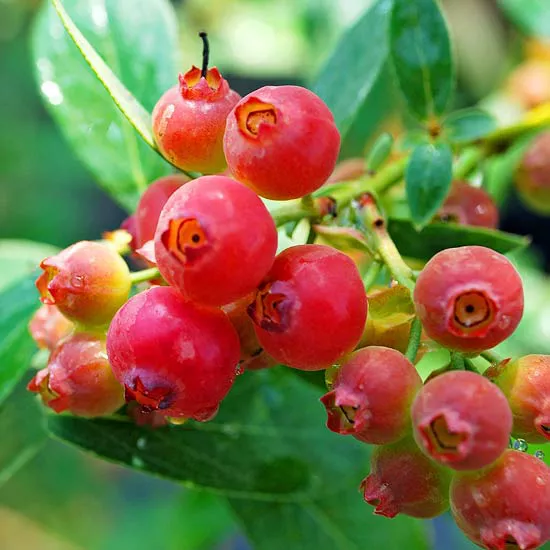
In spring, Pink Lemonade blueberry blooms with small, bell-shaped, pinkish-to-white flowers. About mid to late summer, those flowers begin to set as fruit, but unlike some blueberry plants, Pink Lemonade doesn't set fruit all at once. It generally produces one larger first crop and then more fruit continuously until about October.
Pink Lemonade is definitely sweeter—about two times as much—than a regular blueberry, which means it's good eaten fresh, in desserts, or as a garnish. The fruit begins as a green color and then turns white, then a lighter pink, finally aging to a darker pink. Ready-to-harvest clusters may still be green on the undersides.
Where to Plant Pink Lemonade Blueberry
Like most blueberries, blueberry Pink Lemonade does best in full sun in acidic soil that drains well. It can be grown in urban, coastal, or cottage gardens as a hedge or a fruiting partner to other shrubs and perennials. This cultivar also makes a great container plant if you don't have acidic soil. Blueberries benefit from cross-pollination, so grow Pink Lemonade blueberries along with other blueberry varieties for the best crops.
How and When to Plant Pink Lemonade Blueberry
Plant Pink Lemonade blueberry in the early spring; April or May is optimal whether nursery plants or bare root specimens. If you need to amend the soil, do so about 4 weeks before planting.
Dig a hole twice as deep and wide as the plant's container or root ball. Make sure the hole is large enough to accommodate the roots and cover them with at least 3 to 4 inches of soil. Place your plant in the center and backfill the hole with soil, tamping down as you work to remove any air pockets. Water thoroughly and add a layer of organic mulch to keep the soil evenly moist.
Space about 24 to 36 inches apart if you are growing them as a hedge or up to 6 feet apart if you are growing individual plants.
Pink Lemonade Blueberry Care Tips
Pink Lemonade blueberry is a spring-flowering bush that's also prized for its silvery-bluish leaves—which emerge in March and don't fall off until it's very cold—and pretty yellowish-red twig color.
Light
Pink Lemonade blueberry will grow in semi-shade but does best with six hours or more of sun; otherwise, it will get leggy in the shade and won't produce as much fruit.
Soil and Water
Grow Pink Lemonade blueberry in acidic soil. Ideal soil should be 6.1 pH and somewhat moist but well-drained. Add plenty of organic mulch—4 to 6 inches—around the base of the plant to keep the soil moist and the roots cool.
Temperature and Humidity
Blueberry Pink Lemonade is a rabbiteye blueberry; this type is more compact. Rabbiteye blueberries also have lower cold requirements; Pink Lemonade, for example, only requires 300 hours of temperature below 45 degrees F, while other rabbiteyes need about 500-1,000 hours.
Fertilizer
Compost is the best thing for fertilizing blueberries. However, if plants need a fertilizer boost, use a minimal amount of product for acid-loving plants each spring.
Pruning
Pink Lemonade blueberry produces fruit on two- to three-year-old branches; anything older should be removed. To obtain the best harvest, regularly prune these blueberry plants to remove that older growth.
Potting and Repotting 'Pink Lemonade' Blueberry
Use a pot with plenty of room for Pink Lemonade blueberry to grow. Choose a weatherproof container that has excellent drainage. For young plants, you can start small and repot later as necessary. If you are planting a mature blueberry plant (or a bare-root shrub) stick with a container that is at least 24 inches deep and 24 inches wide.
Add a soilless mix, compost, and include peat moss as well. Make a hole in the soil that is twice the size of the original pot and place the plant in the hole at the same depth. Water it well and place it in an area that has full sun exposure. Keep the soil evenly moist and protect the container in a sheltered location during winter winds. If it gets too cold outdoors, bring the pots inside if possible. If not, add mulch and leaves to protect the plant's roots.
If you need to transplant your blueberry shrub, it’s best to do so in the fall (after the plant has gone dormant) to diminish transplant shock. Water the plant well and moisten the soil in the new pot before starting. Remove the plant from its old container and brush off the old soil from the roots. Holding the plant in place in the new container, fill in the new container with fresh soil and tamp it down to remove any air pockets.
Pests and Problems
Planted in the right condition, Pink Lemonade blueberry shrubs are relatively pest-free. However, they should be protected from deer and rabbits. Birds may eat the fruits before or as they ripen, but can typically be deterred with bird netting.
How to Propagate Pink Lemonade Blueberry
To propagate Pink Lemonade blueberry, use semi-ripe cuttings taken in the summer or late-spring softwood cuttings. Using sharp shears, take a new shoot cutting (about 4 to 6 inches long) from a slightly woody stem. Cut at a 45-degree angle and remove all the leaves from the lower half of the cutting. Stick the cut end into a grow pot to be placed in a sheltered area that remains around 70 degrees Fahrenheit and receives some indirect sunlight. Keep the soil surrounding the cutting evenly moist and it should take root in about 3 to 6 months. In the spring, rooted cuttings can be transplanted to a larger pot or nursery bed to grow until they are big enough to be moved to a more permanent location.
Pink Lemonade Blueberry Companion Plants
Peony
Peonies are hardy plants and easy to grow. They come in pink, red, yellow, and orange. Peonies make excellent cut flowers for bouquets. These herbaceous perennials bloom in spring and die back after the first frost. Zones 3-8
Rhododendron
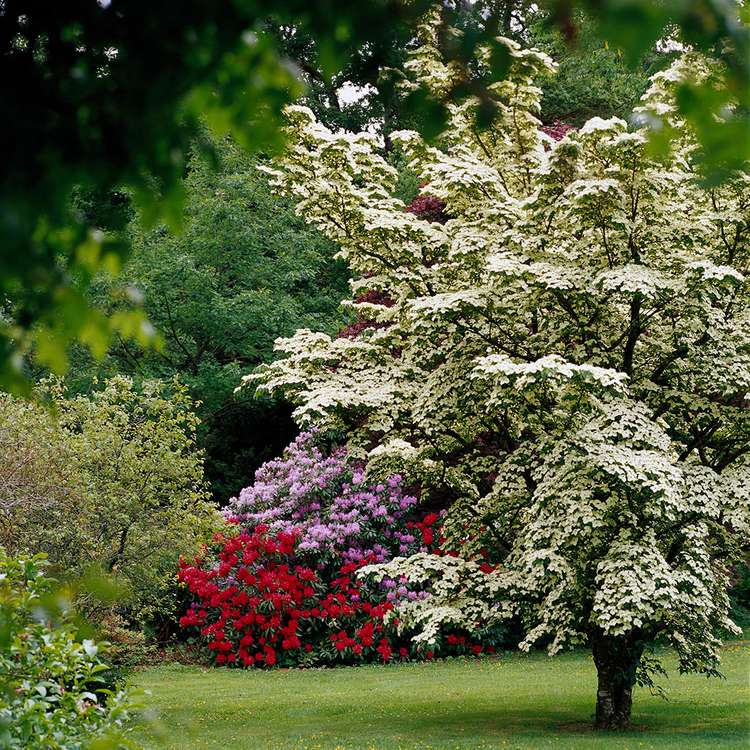
This shade garden plant is prized for its glossy green foliage and showy clusters of blooms. It comes in many colors, with the most common being purples and pinks, as well as white and cream. Zones 3-9