Are Strawberries Perennials That Come Back Every Year?

31K
1.9K
742
2025-11-14
Are Strawberries Perennials That Come Back Every Year?

Before doing the hard work of establishing a strawberry bed, you should know whether strawberries are perennials. The quick answer is yes. However, a few factors need your attention if you want to keep your strawberry patch going for years. Here's what to know about growing strawberries as perennials or annuals, and how to keep them alive for as long as possible.

Strawberries Are Perennial Plants

Strawberries are low-growing herbaceous perennials. Many varieties are cold-hardy in USDA Zones 4–8, with some tolerating Zone 3 winters if properly prepared for the cold weather. Growers in hot southern climates like Florida often grow strawberries as annuals because the heat beats them up. 

Strawberries are categorized by how they fruit: June-bearing, everbearing, or day-neutral. Strawberry plants will live for years but are often considered short-lived perennials because their production slows over time. Eventually, you’re better off replacing them. While June-bearing varieties frequently produce for up to six years, many everbearing or day-neutral varieties are replaced every one to two years for peak production.

Winterizing Strawberries

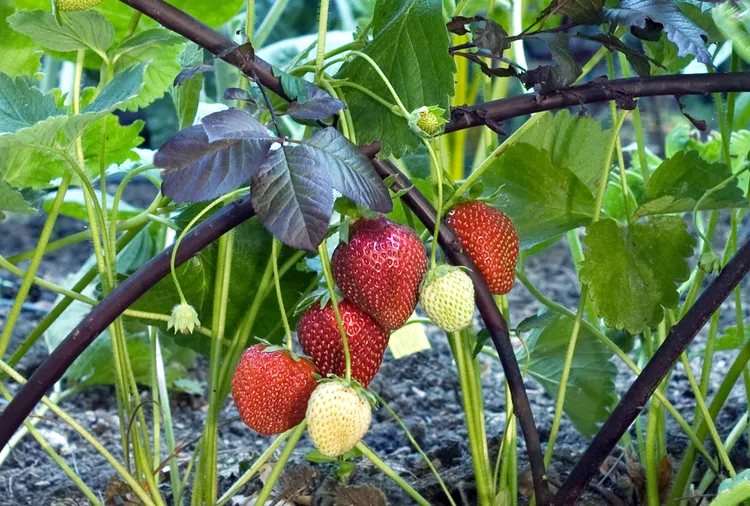
Like many other types of perennials, strawberry plants begin to change in autumn with the arrival of cooler weather. The leaf petioles become horizontal, so the plant appears to be flatter. Older leaves may change color to burgundy, and growth stops. The plants are acclimatizing to the colder weather and preparing for dormancy.

What often makes people wonder, "Are strawberries perennials" is when their plants look brown or weak in spring. These plants have likely suffered cold injury because of a sudden and early bitter cold snap before they had fully gone dormant.

Tips for Mulching Strawberries

Mulching strawberries is key to your plants' longevity. Properly mulched strawberries survive the cold in good condition. Not only does mulch keep weeds down—strawberry patches hate weeds—but it also protects the flower buds that eventually form the fruit.

Dormant strawberries don’t lose their leaves, so the mulch also prevents desiccation caused by cold winter winds. However, you need to use the right mulch and apply and remove it at the right time. A properly applied mulch mimics the insulating properties of snow. If deep snow cover in your area typically arrives before sustained cold temperatures, you may not need straw, but snowfall is unpredictable. You control when you put the mulch on. Don’t trust your berry crop to the weather. 

Best Mulch for Strawberries

Although the name “strawberry” may have origins from the names “strewn berry” or “spreading berry,” reflecting their growth habit, straw really is a perfect mulch for strawberries. Look for dry straw that was (hopefully) not treated with chemicals prior to harvest. Straw from wheat or oats works beautifully. If straw isn’t available, other natural materials like pine needles or shredded leaves will work.

Avoid using hay for mulch. Hay often contains weed seed heads that can make weeding a mess the following year.

When to Mulch Strawberries

Strawberries need to be exposed to some cold before being mulched in order for them to go dormant properly. You don’t need to cover them before the first frost. They need time to acclimatize and be exposed during that period. 

Wait for a few hard freezes (below 28°F for at least three hours) and then check the soil temperature. Once the soil temperature cools to 40°F, it’s time to apply mulch. This typically doesn’t occur until late fall.

Loosely mound the straw or other mulch high enough to be about 3 inches deep after it settles. A light wetting with the hose can help hold it in place. If your area is windy and your mulch is likely to become a yard decoration, use bird netting anchored with a couple of rocks to hold it in place until the winter snows arrive.

Remove some of the mulch in spring, raking it into the paths between rows. Again, soil temperature is a good guide. Remove the straw or other mulching material when the soil temperature warms to about 40°F in early spring. If the weather calls for a cold snap, rake the straw back over the plants or use a floating row cover and frost cloth.
Frequently Asked Questions

  • Should I dig up my strawberries and start over?

    If your strawberry plants are starting to show a decrease in production or smaller berry size, and it isn’t due to late frosts, lack of water, or lack of fertilizer, it might be time to replace them. Disease can also build up in a strawberry patch and affect the harvest. 

  • Should I pinch my strawberry blooms the first year?

    Removing blossoms the first year the strawberries are planted is heartbreaking. However, it encourages the plant to spend more energy developing a healthy and robust root system and increases yields in later years.

  • How many years will strawberries come back?

    Properly cared-for strawberries come back year after year. Daughter plants replace the originals as you renovate the bed. However, due to a drop in production, most gardeners renew their June-bearing strawberry patch after three to five years or their everbearing patch every other year. Start a new bed the year before you rip out the old one to avoid interrupting your strawberry harvest.

Related Article

19 Colorful Window Box Ideas to Brighten Up Your Exterior
3K
301
48

19 Colorful Window Box Ideas to Brighten Up Your Exterior

Use these window box ideas for a no-fail way to dress up your home. We share the right plant combinations to create maximum curb appeal.
Container Gardening for Beginners: 10 Must-Know Tips
46.3K
1.4K
416

Container Gardening for Beginners: 10 Must-Know Tips

Use these container gardening tips for beginners to successfully grow potted plants outdoors.
9 Colorful Plants That Will Thrive on Your Balcony
12.2K
489
58

9 Colorful Plants That Will Thrive on Your Balcony

These balcony plants adapt well to life in a container, and hold up well in the increased heat and wind of their elevated location.
How to Plant and Grow Lisianthus
2.4K
118
47

How to Plant and Grow Lisianthus

Lisianthus flowers come in various romantic colors and add an elegant touch to any garden or floral arrangement.
How to Plant and Grow a Christmas Fern
10.1K
606
254

How to Plant and Grow a Christmas Fern

Learn how to grow Christmas fern, an evergreen perennial that is leafy and green in the deepest winter.
How to Plant and Grow Perennial Peanut
22.3K
1.6K
420

How to Plant and Grow Perennial Peanut

Learn how to grow perennial peanuts for erosion control, weed suppression, and a low maintenance lawn.
How to Prune Roses for Healthier Plants and More Flowers
7.3K
220
105

How to Prune Roses for Healthier Plants and More Flowers

Learn how to prune roses properly so you can keep your rose shrubs, climbers, heirlooms, or modern hybrid roses looking their best through the years.
Garden Privacy Ideas that Incorporate Landscaping and Hardscaping
10.1K
101
43

Garden Privacy Ideas that Incorporate Landscaping and Hardscaping

Check out these garden privacy ideas that include landscaping and hardscaping for creating a beautiful and private oasis in your yard.
How to Prune Basil to Boost Your Harvest
35.5K
354
169

How to Prune Basil to Boost Your Harvest

Learn how to prune basil correctly to delay flowering, encourage more leaves to grow, and take cuttings.
How to Plant and Grow Pineapple Sage
9.5K
569
91

How to Plant and Grow Pineapple Sage

Read this guide to learn how to plant and grow pineapple sage in herb gardens or pollinator habitats!
13 Fast-Growing Trees for a Privacy Screen in Your Yard
42.4K
423
59

13 Fast-Growing Trees for a Privacy Screen in Your Yard

Plant these fast-growing trees and enjoy the beauty—and privacy—of a lush living fence in just a few years.
How to Plant and Grow Purple Hyacinth Bean Vine
33.2K
3.3K
331

How to Plant and Grow Purple Hyacinth Bean Vine

Learn how to grow purple hyacinth bean vine, including planting and care tips, dealing with pests, and propagation.
30 Best Native Plants for Southern Gardens That Thrive in the Heat
11.5K
461
207

30 Best Native Plants for Southern Gardens That Thrive in the Heat

Discover the best native plants for Southern gardens that thrive in local climates. Enhance your landscape with these beautiful, low-maintenance, and eco-friendly options.
Best Plants for Mississippi Landscapes
10K
400
80

Best Plants for Mississippi Landscapes

These award-winning plants are proven successes in landscapes throughout Mississippi and the South.
What Are Cover Crops? And How to Plant Them in Your Home Garden
46.4K
2.8K
1.4K

What Are Cover Crops? And How to Plant Them in Your Home Garden

These step-by-step instructions will help you feed your soil and beat weeds naturally.
How to Make a Mowing Strip
16.4K
655
235

How to Make a Mowing Strip

Leave a 6- to 12-inch-wide mowing strip between the edge of your beds and borders and the lawn. It will help you save time and effort in the garden.
What You Need to Know About Winterizing a Lawn
11.7K
701
196

What You Need to Know About Winterizing a Lawn

Get a jumpstart on a lush, healthy lawn next spring with this guide on winterizing a lawn. Plus, get your lawn mower ready for winter storage.
Enjoy Homegrown Produce With This Large-Scale Vegetable Garden Plan
49.8K
2.5K
1.2K

Enjoy Homegrown Produce With This Large-Scale Vegetable Garden Plan

If you've never planted a large vegetable garden before, you'll want to try out our large vegetable garden layout plans. We'll help you know how to select cold season vs. warm season vegetables and where to plant them for maximum effect.
This Easy-Care Butterfly Garden Plan Will Attract Tons of Pollinators
31.8K
1.6K
636

This Easy-Care Butterfly Garden Plan Will Attract Tons of Pollinators

Use this gorgeous butterfly garden plan to create a bed of flowers that will bring beautiful and beneficial insects to your garden.
This Annual Garden for Full Sun Will Fill Your Yard with Color
17.9K
715
164

This Annual Garden for Full Sun Will Fill Your Yard with Color

Create an easy-care bed of flowers that will look gorgeous from spring until frost.