When and How to Harvest Sunflower Seeds for Eating

2.5K
75
24
2025-10-20
When and How to Harvest Sunflower Seeds for Eating

Tall, colorful sunflowers always stand out in summer gardens. And when those striking flowers fade, they'll produce edible seeds that are among the finest snack foods you can grow in your garden. Knowing when and how to harvest sunflower seeds takes some practice, but these tips will help you pick your sunflowers when the seeds are at peak flavor.

When to Harvest Sunflower Seeds

If you inspect the back of sunflower seed packets, you’ll notice they usually include information about “days to maturity.” However, this typically refers to when sunflower plants will bloom. Most seed packets don’t provide any information about when the sunflower seeds will be ready to harvest.

Most sunflower varieties bloom in about two to three months, but sunflower seeds take a month to mature after the flowers open or 80 to 140 days after sowing. The sunflower seeds can be harvested from July through October, depending on when you planted the sunflower seeds and the varieties you're growing.

How to Tell When Sunflower Seeds Are Ready to Harvest

Knowing when to harvest sunflower seeds is a bit of a balancing act. Harvest them too early and you end up with small and tasteless kernels; if you pick too late, birds and other wildlife might beat you to the harvest. What’s more, some sunflower varieties mature faster than others, but there are signs you can look for when deciding if your sunflower seeds are ripe.

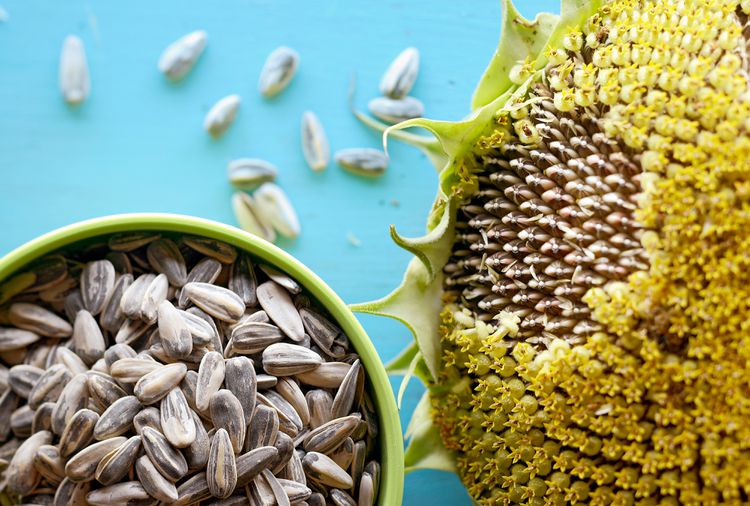
As sunflowers mature and the seeds develop, the sunflower blooms dry out and droop on their stems, and the plant’s leaves begin to yellow. If you inspect the back of sunflower blooms, you’ll notice that mature flowerheads turn from green to yellowish-brown, and the plant’s petals wither and fall off. These are all key signs that your sunflowers are ready to be picked.

How to Harvest Sunflower Seeds

When harvest time arrives, growers have two basic harvesting options for sunflower seeds. Seeds can be thoroughly dried on the plant or harvested early and dried indoors. Outdoor drying usually yields slightly more flavorful seeds; however, allowing seeds to mature fully on the plant increases the chances that birds gobble up the seeds before you get a chance to pick them.

If you prefer to dry sunflower seeds indoors, harvest the sunflowers when the backs of the flowerheads turn from green to yellow. To harvest, cut the sunflower stems with a sharp knife or pruners about 6–12 inches below the flowerhead, remove any remaining leaves, and bundle two to three sunflower stems together with twine. Hang these sunflower bundles upside down in a dark, well-ventilated space until they’re completely dry, and the back of the flowerheads turn brown.

If you’d rather dry sunflower seeds outdoors, cover the sunflower blooms with paper bags, cheesecloth, or fine mesh fabric as soon as the plant’s petals begin to wilt. This protects the sunflower seeds from hungry birds as the seeds dry in the sun. When the back of the sunflower blooms turn brown, snip off the flowerheads and bring them indoors to collect the seeds.

Once you have mature sunflower heads, the next step is removing the seeds. Grab a large bowl or bucket and rub the sunflower seeds off the flowers with your thumb or a brush. You can also rub two of the heads together to help dislodge the seeds. Ripe seeds should be plump and well-formed, and they should separate easily from the flowerheads as you work. If the seeds don’t seem ripe, hang the sunflowers to dry for a few more days.

How to Roast and Store Fresh Sunflower Seeds

Although you can eat raw homegrown sunflower seeds right after harvesting, roasting the seeds enhances their flavor and makes the hulls easier to remove.

To roast sunflower seeds, spread out the fresh seeds in a single layer on a baking sheet and bake them at 400°F for five minutes. After they are roasted, sunflower hulls should crack open easily, but if they’re still hard to open, roast the seeds at 2-minute intervals until the seeds are dry. Be careful not to overcook or brown the sunflower seeds, as this diminishes their flavor.

To roast and salt sunflower seeds, place 1 cup of raw sunflower seeds in a quart of water with 2 to 4 tablespoons of salt. Bring the water to a boil on the stove, turn down the heat, and simmer the seeds for 15 minutes. Drain the seeds, spread them on a baking sheet in a single layer, and bake them at 400°F for 10 to 15 minutes until they are dry.

Both raw and roasted sunflower seeds can be stored in air-tight containers in your pantry for about 2 to 3 months. For extended storage, keep sunflower seeds in your freezer, where they’ll stay fresh for a year. While sunflower seeds are hard to resist snacking on, don’t forget to save a few raw sunflower seeds to plant in next year’s garden.
Frequently Asked Questions

  • What is the difference between black and striped sunflower seeds?

    Some varieties of sunflowers produce striped seeds, while others produce seeds with black hulls. Both types of sunflower seeds are edible. However, striped sunflower seeds usually have thicker shells.

  • Can you plant sunflower seeds for birds?

    Absolutely! While sunflower seeds make delicious snacks for humans, you can also leave some sunflower blooms in your garden to feed wild birds. An added benefit of growing sunflowers for wildlife is that birds and other animals often sow sunflower seeds for you.

  • How do you remove the hulls from sunflower seeds quickly?

    If you need to shell a lot of sunflower seeds at once, place dry seeds in a plastic baggy and run a rolling pin over them using light pressure. The hulls should separate easily from the seed kernels, and you only need to pick out the empty hulls.

Article "tagged" as:

Related Article

19 Colorful Window Box Ideas to Brighten Up Your Exterior
3K
301
48

19 Colorful Window Box Ideas to Brighten Up Your Exterior

Use these window box ideas for a no-fail way to dress up your home. We share the right plant combinations to create maximum curb appeal.
Container Gardening for Beginners: 10 Must-Know Tips
46.3K
1.4K
416

Container Gardening for Beginners: 10 Must-Know Tips

Use these container gardening tips for beginners to successfully grow potted plants outdoors.
9 Colorful Plants That Will Thrive on Your Balcony
12.2K
489
58

9 Colorful Plants That Will Thrive on Your Balcony

These balcony plants adapt well to life in a container, and hold up well in the increased heat and wind of their elevated location.
How to Plant and Grow Lisianthus
2.4K
118
47

How to Plant and Grow Lisianthus

Lisianthus flowers come in various romantic colors and add an elegant touch to any garden or floral arrangement.
How to Plant and Grow a Christmas Fern
10.1K
606
254

How to Plant and Grow a Christmas Fern

Learn how to grow Christmas fern, an evergreen perennial that is leafy and green in the deepest winter.
How to Plant and Grow Perennial Peanut
22.3K
1.6K
420

How to Plant and Grow Perennial Peanut

Learn how to grow perennial peanuts for erosion control, weed suppression, and a low maintenance lawn.
How to Prune Roses for Healthier Plants and More Flowers
7.3K
220
105

How to Prune Roses for Healthier Plants and More Flowers

Learn how to prune roses properly so you can keep your rose shrubs, climbers, heirlooms, or modern hybrid roses looking their best through the years.
Garden Privacy Ideas that Incorporate Landscaping and Hardscaping
10.1K
101
43

Garden Privacy Ideas that Incorporate Landscaping and Hardscaping

Check out these garden privacy ideas that include landscaping and hardscaping for creating a beautiful and private oasis in your yard.
How to Prune Basil to Boost Your Harvest
35.5K
354
169

How to Prune Basil to Boost Your Harvest

Learn how to prune basil correctly to delay flowering, encourage more leaves to grow, and take cuttings.
How to Plant and Grow Pineapple Sage
9.5K
569
91

How to Plant and Grow Pineapple Sage

Read this guide to learn how to plant and grow pineapple sage in herb gardens or pollinator habitats!
13 Fast-Growing Trees for a Privacy Screen in Your Yard
42.4K
423
59

13 Fast-Growing Trees for a Privacy Screen in Your Yard

Plant these fast-growing trees and enjoy the beauty—and privacy—of a lush living fence in just a few years.
How to Plant and Grow Purple Hyacinth Bean Vine
33.2K
3.3K
331

How to Plant and Grow Purple Hyacinth Bean Vine

Learn how to grow purple hyacinth bean vine, including planting and care tips, dealing with pests, and propagation.
30 Best Native Plants for Southern Gardens That Thrive in the Heat
11.5K
461
207

30 Best Native Plants for Southern Gardens That Thrive in the Heat

Discover the best native plants for Southern gardens that thrive in local climates. Enhance your landscape with these beautiful, low-maintenance, and eco-friendly options.
Best Plants for Mississippi Landscapes
10K
400
80

Best Plants for Mississippi Landscapes

These award-winning plants are proven successes in landscapes throughout Mississippi and the South.
What Are Cover Crops? And How to Plant Them in Your Home Garden
46.4K
2.8K
1.4K

What Are Cover Crops? And How to Plant Them in Your Home Garden

These step-by-step instructions will help you feed your soil and beat weeds naturally.
How to Make a Mowing Strip
16.4K
655
235

How to Make a Mowing Strip

Leave a 6- to 12-inch-wide mowing strip between the edge of your beds and borders and the lawn. It will help you save time and effort in the garden.
What You Need to Know About Winterizing a Lawn
11.7K
701
196

What You Need to Know About Winterizing a Lawn

Get a jumpstart on a lush, healthy lawn next spring with this guide on winterizing a lawn. Plus, get your lawn mower ready for winter storage.
Enjoy Homegrown Produce With This Large-Scale Vegetable Garden Plan
49.8K
2.5K
1.2K

Enjoy Homegrown Produce With This Large-Scale Vegetable Garden Plan

If you've never planted a large vegetable garden before, you'll want to try out our large vegetable garden layout plans. We'll help you know how to select cold season vs. warm season vegetables and where to plant them for maximum effect.
This Easy-Care Butterfly Garden Plan Will Attract Tons of Pollinators
31.8K
1.6K
636

This Easy-Care Butterfly Garden Plan Will Attract Tons of Pollinators

Use this gorgeous butterfly garden plan to create a bed of flowers that will bring beautiful and beneficial insects to your garden.
This Annual Garden for Full Sun Will Fill Your Yard with Color
17.9K
715
164

This Annual Garden for Full Sun Will Fill Your Yard with Color

Create an easy-care bed of flowers that will look gorgeous from spring until frost.