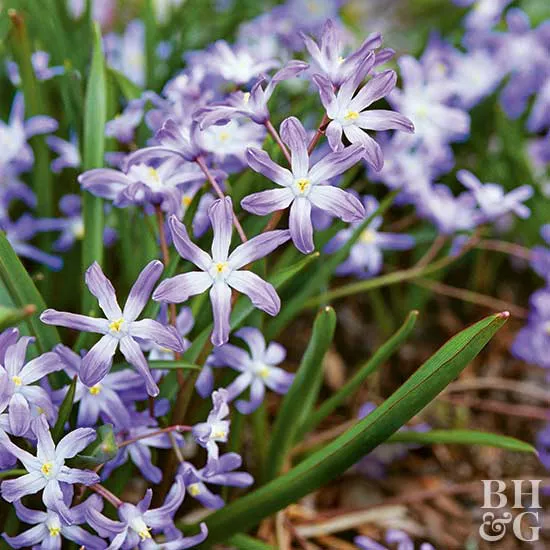
Native to Western Turkey, glory-of-the-snow flowers are some of the earliest to bloom. In fact, these cheery little spring-blooming bulbs are often so early that there is still snow on the ground—hence their common name. The plant features long, narrow, grass-like foliage and clusters of small, six-petal flowers in shades of blue, white, and pink. The most common variety, Chionodoxa forbesii, features blooms with a striking white center and blue-tipped petals; but all glory-of-the-snow bulbs produce great cut flowers that are the perfect size for a bud vase.
Over the years, there has been much confusion on the proper nomenclature for glory-of-the-snow. While the plant is classified under the name Chionodoxa, its starry little blossoms closely resemble Scilla, another bulb that grows in full to partial sun. The resemblance is so close, in fact, that many experts still classify glory-of-the-snow as a sect of the genus Scilla—arguing that the differences between the two do not warrant a separate classification.
Glory-of-the-Snow Overview
| Genus Name | Chionodoxa |
| Common Name | Glory-of-the-Snow |
| Plant Type | Bulb |
| Light | Part Sun, Sun |
| Height | 4 to 6 inches |
| Width | 3 to 6 inches |
| Flower Color | Blue, Pink, White |
| Foliage Color | Blue/Green |
| Season Features | Spring Bloom |
| Special Features | Cut Flowers, Good for Containers, Low Maintenance |
| Zones | 3, 4, 5, 6, 7, 8 |
| Propagation | Division, Seed |
Where to Plant Glory-of-the-Snow
You can plant these bulbs just about anywhere in the garden that receives full to partial sun—especially in spots where you want to chase away the last of the winter blues. Place them along a sunny pathway, amid a rock garden, or beneath the dappled light of a tree. Glory-of-the-snow bulbs can even be naturalized into lawns for a burst of spring color that arrives before most lawns start flourishing.
As quick as glory-of-the-snow plants are to rise in early spring, their foliage is almost as quick to fade. The foliage begins to quickly decline and goes dormant just after the bulbs finish flowering. Glory-of-the-snow plants that are allowed to grow freely in lawns can then be mowed along with the grass.
How and When to Plant Glory-of-the-Snow
Plant your glory-of-the-snow bulbs in mid to late fall when the air is cool but before the ground begins to freeze. In cooler hardiness zones (3-5), this could mean planting as early as September. In warmer zones (8), it could mean waiting until December to plant.
Unless you are planting your bulbs in a cluster, place your glory-of-the-snow bulbs approximately 3 inches apart and 2 to 4 inches deep. As a rule, it’s best to set your bulb about two to three times as deep as the bulb is wide, so if you have a 1-inch-wide bulb, plant it 2 to 3 inches deep. If planting in a cluster, dig a hole 6 inches wide and deep and place several (5 to 7) bulbs in the same hole all pointed up. Replace the soil and water thoroughly.
To plant glory-of-the-snow bulbs among your grass, lift a section of grass and press the bulbs (pointed end up) into the soil approximately 2 to 3 inches apart. Replace the grass over the top of the bulbs and water the grass as you would to keep it healthy. The bulbs should emerge in the spring.
Glory-of-the-Snow Care Tips
Glory-of-the-snow plants are so simple to grow, you can practically just put them in the ground and forget about them. Native to rocky mountainsides, these early bloomers are both unfussy and self-sufficient in naturalizing to their environment—a bonus if you want to fill an otherwise drab space with early spring blooms.
Light
Glory-of-the-snow thrives in full sun but also fares well in partial or dappled sun. If you are planting your Chionodoxa plants in partial shade, make sure they get about 6 hours of direct exposure to bright morning sun each day.
Soil and Water
Glory-of-the-snow requires well-drained soil with a neutral to slightly acidic (6.0–7.0) pH level. It can tolerate drought, but—like most bulbs—it is at a higher risk of rotting if grown in overly moist soil.
In areas with regular rainfall, glory-of-the-snow bulbs may not need any supplemental watering. If your region does not get much rainfall, water your glory-of-the-snow plants whenever conditions are dry during the early stages of the plant’s growth cycle. Once the blooms have faded, reduce your watering routines. In any region, you can stop watering glory-of-the-snow bulbs once the foliage begins to wither.
Temperature and Humidity
True to their common name, glory-of-the-snow plants do best in cooler climates. In fact, the cold stretch between fall planting and spring blooming is an essential part of the plant’s life cycle. For planting glory-of-the-snow bulbs, the ideal temperature is between 40 and 50 degrees Fahrenheit. If conditions are unseasonably warm, the bloom season may arrive early and be shorter than it would in cooler years.
Glory-of-the-snow needs moist, well-draining soil to thrive, but if conditions are too wet and humid, the bulbs could rot. If the air and soil are too dry, your bulbs may not bloom. After the foliage has faded, however, the dormant bulbs can tolerate summer drought and dry conditions.
Fertilizer
Glory-of-the-snow bulbs should not need fertilization if they are planted in proper soil with ample exposure to sunlight. If you are concerned about the quality of your soil, add a small amount of 10-10-10 balanced fertilizer when shoots first appear. Do not fertilize your plants if blooms have already emerged.
Pruning
Pruning should not be necessary for glory-of-the-snow plants—especially since they tend to grow only 6 inches tall at best. If you are naturalizing them into a lawn, you can mow your glory-of-the-snow plants with the mower blades set high once the blooms have faded. After the foliage has died back (about 5 to 6 weeks), mow as you would a traditional lawn.
For plants grown in garden beds or other landscape spots, leave the foliage in place until it dries and turns yellow. The waning foliage will continue to create food for the bulb through photosynthesis and strengthen the bulb for future growth.
Potting and Repotting
Glory-of-the-snow bulbs can also be grown in outdoor containers using many of the same conditions and techniques required for growing them in the ground. Choose a container with excellent drainage and fill it with loose, well-draining potting mix. Plant your bulbs about 3 inches deep and 1 to 3 inches apart. Keep the container in a spot that receives full to partial sun and water your plants only if your region is without rain for several days in a row or the soil feels dry to the touch.
If you live in a cooler climate, you may want to bring container-grown glory-of-the-snow bulbs inside to a cool, dark, unheated space—like a garage, shed, or basement to protect the plants from frost damage. After the foliage has turned from green to yellow and then brown, you can remove it.
Repotting is not necessary as the plant will die back at the end of each season. If, however, the bulbs develop offshoots and become too crowded in their pot, you can divide your glory-of-the-snow bulbs into separate containers.
Pests and Problems
Since they bloom before most insects are in season, glory-of-the-snow plants are generally pest-free. In some areas, however, parasitic nematodes can destroy bulbs (as can hungry mice, squirrels, or chipmunks).
Glory-of-the-snow is also not prone to plant or bulb diseases, but if conditions are too moist, bulb rot and gray mold can be an issue.
How to Propagate Glory-of-the-Snow
In a welcoming environment, glory-of-the-snow can spread with no help at all through seeds and bulb offshoots. You can manage the growth of your plants or propagate them yourself by intervening in those processes.
If you want to collect Chionodoxa seeds, look for round seed pods to form in late spring. Remove them when the seeds are black, but before the seed capsules have opened, and plant them immediately in the ground or a cold frame. Sow the seeds on the surface of good quality soil mixed with compost and gently water them. The seedlings may take a few years to flower, but they can be transplanted later in the same summer they are planted.
To divide your glory-of-the-snow bulbs, moisten the soil and dig them up in the fall. Remove any bulb offshoots and discard them or plant them separately. It’s best to divide congested clumps every 3 to 4 years to maintain vigorous growth.
Types of Glory-of-the-Snow
'Alba' Glory-of-the-Snow
This variety of Chionodoxa luciliae is a white flowering form of the traditional species. Plant it in zones 3-8.
Glory-of-the-Snow
Chionodoxa lucilae offers starry blue flowers that open early in the spring, even blooming through snow. The petals reflex and reveal white centers that resemble a touch of clouds on sky-blue petals. It grows approximately 5 inches tall in zones 3-9.
'Pink Giant' Glory-of-the-Snow
Lilac-rose flowers that unfurl in a tall column make this variety of Chionodoxa lucilae unique. It grows 6 inches tall in zones 3-9.
'Violet Beauty' Glory-of-the-Snow
This Chionodoxa luciliae selection is a beautiful bright pink form of the standby. Plant it in zones 3-8.
Chionodoxa sardensis
Chionodoxa sardensis is another great species with bright blue flowers, but this variety features no white on the petals. Plant this beauty in zones 3-8.
Companion Plants for Glory-of-the-Snow
Daffodil
No spring garden would be complete without the addition of daffodils. They are sunny, simple to grow, and there are so many to choose from, you can find the perfect daffodil for almost any landscape. In fact, according to the American Daffodil Society, there are between 40 and 200 different species of daffodils to choose from and over 32,000 registered cultivars. With glory-of-the-snow bulbs, small-cup daffodils make a cheerful and size-appropriate companion. In fact, we love the combination so much, we planted Chionodoxa forbesii bulbs alongside tiny dwarf daffodils in the BHG Test Garden in Des Moines, Iowa.
Grape Hyacinth
Grape hyacinth is another unfussy early spring bloomer that grows in full to partial sun and neutral to slightly acidic soil. It is hardy in zones 4-8 and, like glory-of-the-snow, returns every year with no need for replanting.
Hellebore
Like glory-of-the-snow, hellebores are easy to grow and pretty to look at. Unlike glory-of-the-snow, however, the stunning, colorful bowl-shaped flowers of hellebores remain on the plant for several months. Deer-resistant and mostly evergreen, hellebores' divided leaves rise on sturdy stems and may be serrated along the edges. They are hardy in zones 4-9.
Primrose
Primroses are staples of the cottage garden and it’s easy to see why with their dainty blossoms that come in a rainbow of colors. Like glory-of-the-snow, primroses are also a popular choice for rock gardens and for naturalizing into lawns. Choose a shade-loving primrose to add color where glory-of-the-snow can’t or look for varieties that can grow alongside your glory-in-the-snow in full or partial sunlight. Primroses are hardy in zones 2-8.