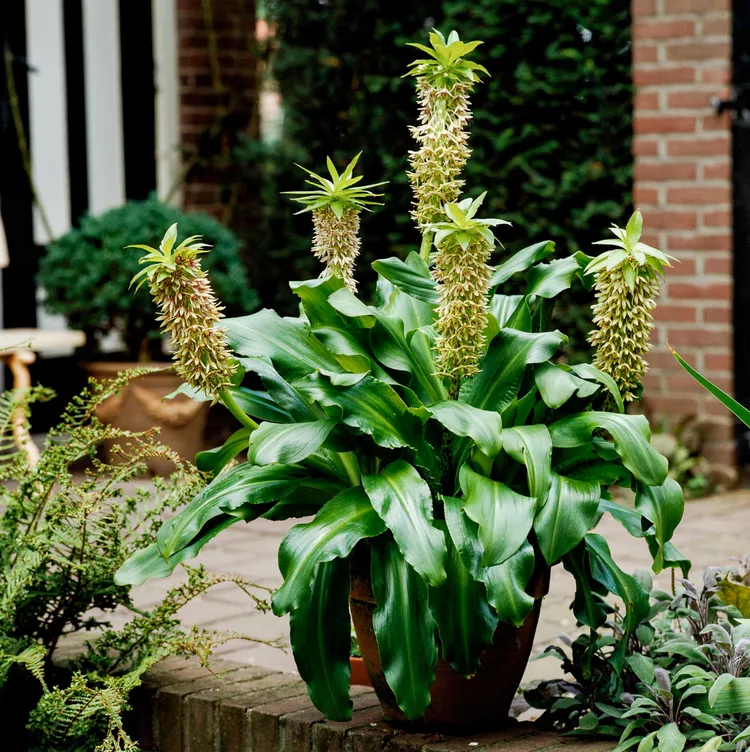
Grown for its ability to add instant tropical vibes to a space, pineapple lily is a genus of tender bulbs native to South Africa. There are more than 10 species of Eucomis with new hybrids becoming available every year.
The 12- to 20-inch flower spikes have star-like flowers in green, white, pink, or purple that attract hummingbirds, butterflies, and other pollinating insects. Above the flowers at the top of the flower spike sits a pineapple-like tuft of small leaves. The leaves are wide and strappy.
Count on pineapple lily to bloom for six weeks or more in summer. After the bloom, the flowers turn into showy seed capsules. The flower spikes make good cut flowers with a vase life of more than three weeks.
Pineapple lily grows well in both the landscape and in containers. In cold climates, dig up bulbs and save them in a frost-free place over winter or simply treat them as annuals and enjoy them for one season.
Pineapple Lily Overview
| Genus Name | Eucomis spp. |
| Common Name | Pineapple Lily |
| Plant Type | Bulb |
| Light | Part Sun, Sun |
| Height | 10 to 30 inches |
| Width | 10 to 24 inches |
| Flower Color | Green, Pink, Purple, White |
| Foliage Color | Blue/Green, Purple/Burgundy |
| Season Features | Summer Bloom |
| Special Features | Attracts Birds, Good for Containers, Low Maintenance |
| Zones | 10, 7, 8, 9 |
| Propagation | Division |
| Problem Solvers | Deer Resistant |
Where to Plant Pineapple Lily
Except for the hottest climates, where it benefits from some afternoon shade, plant pineapple lily in a location with full sun. In terms of soil and pH, the plants are adaptable but excellent drainage is essential.
In their native South Africa, pineapple lilies grow in open, rocky areas, which makes them a perfect choice for rock gardens. Flower borders are fine too if the soil drains well. Pineapple lily also makes a good container plant, either on its own or as an accent plant in a larger container.
For the best effect, plant pineapple lily in groups of three or more bulbs together to create an eye-catching display of bold foliage and flowers.
Pair this bold tropical bulb with bright magenta, purple, yellow, and orange annuals for a summer-long parade of color.
How and When to Plant Pineapple Lily
When selecting bulbs, size matters—larger bulbs produce larger plants.
Plant the bulbs in the spring after there is no more danger of frost and soil temperatures are above 65 degrees F.
Depending on the size of the bulbs, plant them 4 to 6 inches deep, with the root side down. Space the bulbs about 6 inches apart.
Mulch the planting area and keep it evenly moist but not wet.
Pineapple Lily Care Tips
If you live in a cool climate and you don't want to purchase fresh bulbs every year, overwintering the bulbs adds an extra step to the plant care but other than that, pineapple lily does not require much effort to grow.
Light
A location in full sun is generally best for the plant to flourish, however, in hot climates, some filtered sun or partial shade in the afternoon is beneficial.
Soil and Water
The most important soil characteristic is good drainage because the roots of the plant will rot in heavy, wet, or boggy soil. Fertile soil with a pH between 5.5 and 7.5 is ideal but pineapple lily also adapt to less nutrient-rich soil.
After the plants are established, they are drought-tolerant and won’t need additional watering except in periods of extended drought.
Temperature and Humidity
Pineapple lily is hardy in Zone 7 and above, though it may also overwinter in Zone 6 when its root zone is covered with a thick blanket of mulch. In colder zones, dig up in-ground or containerized bulbs in the fall before your area's first frost.
Fertilizer
In the spring when the plants start to grow, apply a complete balanced fertilizer. Depending on how rich the soil is, and for container plants, monthly applications of liquid fertilizer during the growing seasons help to keep the plant lush and vigorous.
Pruning
It is up to you whether you want to remove the spent flowers after the bloom or let them turn into showy seed capsules. Yellow, dead or diseased leaves and stems, on the other hand, should be removed promptly.
At the end of the season, don’t prune the foliage, instead, let it die back naturally.
Potting and Repotting Pineapple Lily
Pineapple lily is a cinch to grow in a container. Make sure the pot has good drainage holes and use coarse, well-draining potting mix.
Plant one bulb in a 5- to 6-inch pot or three to five bulbs in a 12-inch pot. Fill the container to the top so the bulbs are fully covered with soil.
Despite the drought-tolerance of pineapple lily, potted plants need frequent watering, as the soil dries out much faster than garden soil.
When the bulbs have filled the pot, repot the plant to a larger pot or divide it. Pineapple lily grown as annuals won’t need repotting.
Pests and Problems
Pineapple lily is unbothered by serious pests or diseases although it attracts slugs, snails, and aphids.
The plant is resistant to deer and rabbits.
How to Propagate Pineapple Lily
While it is possible to propagate pineapple lily from leaf cuttings and seed, it takes three to four years for plants to reach the flowering stage. A faster way to propagate the plant is to divide the plant about every three years after it has grown sizeable bulb offsets. In the early spring, carefully dig up the entire clump. Wash the soil off with a hose and break them apart or use a sharp knife to separate them. Replant the bulbs at the same depth as the original plant.
Note that some cultivars of pineapple lily are protected by a plant patent and may not be propagated in any form.
Types of Pineapple Lily
'Leia' Pineapple Lily
'Leia' ('Aloha Lily Leia') is a compact variety with striking dark flowers. Its burgundy-maroon buds open to raspberry-pink flowers. It blooms in midsummer, several weeks earlier than other pineapple lilies. Zones 7-10
'Sparkling Burgundy' Pineapple Lily
Eucomis comosa 'Sparkling Burgundy' bears purple foliage and pink-blushed flowers in summer. It grows 2 feet tall. Zones 7-9.
‘Purple Reign’ Pineapple Lily
This hybrid (trademark name ‘Crowning Glory’) has deep burgundy foliage that holds its dark color well into summer. The star-shaped flowers are a blush pink when they open, then turn a deep mauve. Zone 6-9
Pineapple Lily Companion Plants
Calibrachoa
Calibrachoa is an annual with trumpet-shaped annual flowers that grows and blooms at an amazing rate. Calibrachoa blooms come in a rainbow of options, including yellow stars, speckles, veined and segmented petals, and sometimes combinations of all of the above. The extremely vigorous plants thrive in full sun, both in garden beds and containers. Thanks to extensive breeding, they bloom all season, no matter how long or short the days are in the fall.
Angelonia
Also called summer snapdragon, angelonia is a spectacular addition for continuous color in any garden. A warm-climate perennial or annual, angelonia stands up against summer's heat and humidity with no problem. Most angelonia plants grow upright with spires of flowers and deep green, glossy foliage. The plants usually don't grow more than 1 foot tall so they won’t tower even over shorter neighbors. Zone 9-11
Sweet Potato Vine
This vigorously growing annual vine is grown primarily for its superb foliage and valued for its ability to power through just about anything while bringing interesting shapes, sizes, and colors to a garden bed or container. Sweet potato vine thrives in the summer heat. Typically used as spillers in containers, they also make fantastic groundcovers.