In my garden, I have a treasured bridal wreath spirea my grandmother gave me from a 200-year-old plant that grew on our family homestead in Alabama. Unfortunately, this type of fast-growing, non-native shrub is crowding out wild native plants in many areas of the country. A lot of plants that have been passed down through generations, as well as plants for sale right now in garden centers, are considered invasive in many states. According to the United States Department of Agriculture, these exotic species are capable of smothering wildflowers, toppling shade trees, and strangling native shrubs and small trees that provide food and shelter to wildlife.
The good news is that there are plenty of beautiful native plants that make excellent alternatives in the landscape. Here's a list of the top invasive plants and the best native substitutes to grow instead. And if, like me and my heirloom spirea, you have one of these offenders that you just can't part with, make an extra effort to keep it under control (I also remove invasive privet from a nearby woodland in atonement).
1. Invasive Plant: Japanese Honeysuckle
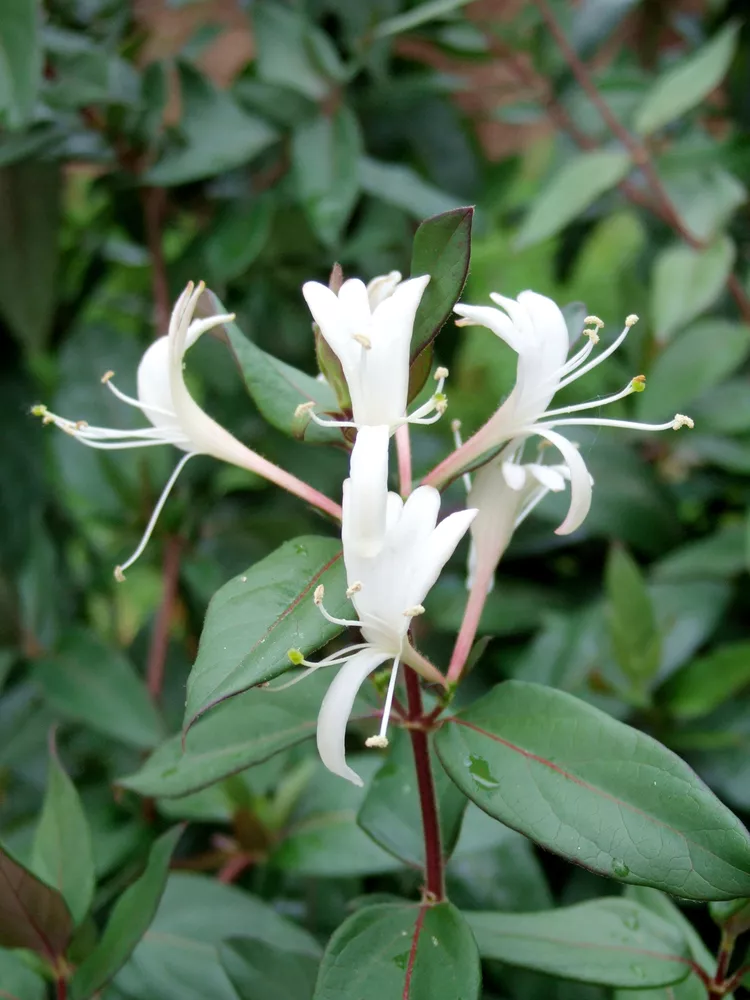
You may love Japanese honeysuckle (Lonicera japonica) for its sweetly scented blooms, but this vigorous vining plant can quickly become unmanageable in a garden. In woodlands and other natural areas, it can blanket trees and shade out native seedlings. Japanese honeysuckle was introduced to the United States in 1806 to control erosion, but now this plant is a big problem in 26 states.
Native Alternative: Trumpet Honeysuckle
For a similar looking and smelling vine, go with trumpet honeysuckle (Lonicera sempervirens). Also called coral honeysuckle ($17, Etsy), it's native to the Southern parts of the United States and is hardy in Zones 4-9. Hummingbirds love the red blooms, and other birds eat the berries it produces after the blooms fade. Just don't confuse this plant with trumpet vine (Campsis radicans), which also has tubular orange-red blooms that attract hummingbirds, but it's invasive in the Southeast.
2. Invasive Plant: Butterfly Bush
What could be bad about a butterfly bush? It attracts butterflies and bees, and that's good, right? The problem with butterfly bush (Buddleia davidii) is that it excels at spreading its seeds all over the place. The Chinese native is listed as invasive in 20 states, including all of the West Coast. It can take over woodlands and stream areas, pushing out native plants. Worst of all, only adult butterflies can feed on the nectar of the butterfly bush, crowding out plants that feed butterfly larvae, too.
Native Alternative: California Lilac
Feed butterflies in all life stages, from caterpillar to adult, with a California lilac (Ceanothus). You get the fragrant, blue-purple blooms of a butterfly bush without its aggressive growth. Native to California and other parts of North America, California lilacs ($9, Plants Express) aren't actually true lilacs, but instead members of the buckthorn family. They're hardy and drought-tolerant in Zones 8-10. The 'Victoria' cultivar is a tad more cold-hardy and will grow in Zone 7.
3. Invasive Plant: English Ivy
While ivy is desirable in academia, it becomes a nightmare in some landscapes. When English ivy (Hedera helix) gets loose in the wild, it can choke trees and cover the understory in a dense blanket nothing will grow through. In cities and suburbs, English ivy is also a haven for rats and carpenter ants. It's native to northern Europe, where cold weather keeps its spread in check. In the warmer areas of the U.S., it's not cold enough to kill it and the stuff is like kudzu (an invasive vining plant that's invaded the South) with a pedigree.
Native Alternative: Cross Vine
Want a fast-growing climber to cover a wall and give it the look of mature landscaping? Go with cross vine (Bignonia capreolata), an evergreen, woody vine native to the southeastern United States that produces yellow and mahogany flowers, as well as dense foliage. Cross vines can get huge, reaching 30 to 50 feet high, and spreading to 9 feet wide, so they can cover a lot of area. Bees, butterflies, and hummingbirds love the blooms, so you'll help out pollinators that never would have come near ivy. Cross vine grows in Zones 6-9.
4. Invasive Plant: Japanese Barberry
Japanese barberry (Berberis thunbergii) brings color to the fall landscape with its red leaves and berries. Like most imported plants, it arrived with good intentions. Japanese barberry was introduced in Boston in 1875 as a replacement for a European variety of barberry that harbored crop-damaging wheat rust. A century and a half later, Japanese barberry is invasive across the eastern and midwestern U.S.
Native Alternative: Beautyberry
If you want fall color, go for beautyberry (Callicarpa americana) instead. This North American native grows beautiful, bright purple berries in Zones 5-10. Its foliage turns magenta-purple in the fall, so you get autumn color, too. Its seeds and berries are an important food source for songbirds, deer, and squirrels. Beautyberry ($16, The Home Depot) blooms in the spring and summer, attracting butterflies and other native insects.
5. Invasive Plant: Burning Bush
Birds adore the fruit of burning bush (Euonymus alatus), an Asian native, which means they spread the seeds absolutely everywhere. That's led to burning bush being deemed an invasive menace in most states east of the Mississippi, where the shrub is taking over native forests, fields, and coastal scrublands. A long-time popular ornamental shrub in gardens, burning bush is pushing out native plants that wildlife needs for food and shelter.
Native Alternative: Chokecherry
To get the fall color of burning bush without the ecological destruction, go with chokecherry (Prunus virginiana) instead. This shrub is native to much of North America, from Newfoundland to Tennessee, flourishing in Zones 2-10. It produces bright orange and red leaves in the fall, and scarlet berries in the summer on a shrub that grows to 20 feet tall. Chokecherry ($50, Etsy) is a valuable source of food for wildlife, feeding five species of butterflies, 10 species of silk moths, and a slew of songbirds.
6. Invasive Plant: Japanese Spirea
Japanese spirea (Spiraea japonica) is an old-time favorite in many gardens, prized for its pink or white flowers in spring and red, orange, and yellow foliage in the fall. It was introduced to the U.S. in the 1870s, but escaped gardens and is now classified as an invasive in the mid-Atlantic states.
Native Alternative: Virginia Sweetspire
Enjoy fragrant white flowers in early summer and colorful leaves in the fall with Virginia sweetspire (Itea virginica). Native to the southeastern United States, this easy-care, drought-tolerant shrub grows in Zones 3-7 and reaches 4 feet tall and wide. 'Henry's Garnet' ($49, Etsy) is a popular variety that stays more compact at about 3 feet tall, and it offers purplish-red fall color.
7. Invasive Plant: Japanese Wisteria
Everybody loves wisteria (Wisteria floribunda) for its fragrant purple blooms that drip from the robust vines in spring. It was introduced to the U.S. in the 1830s from Asia, but escaped into the wild, and is now an invasive plant in 19 states. A wisteria vine can live for more than 50 years and will rapidly grow up anything in its path, so it girdles and shades native plants.
Native Alternative: American Wisteria
American wisteria (Wisteria frutescens) has drooping, romantic purple flowers like its Asian cousin, but without the aggressive growth habit. It's hardy in Zones 5-9, where it can be trained to grow on arbors, walls, and columns. The flower clusters of American wisteria ($42, Etsy) are a little smaller than those on the Asian species, but just as fragrant. It attracts pollinators and feeds the larvae of several butterfly species. Another closely related native alternative is Kentucky wisteria (Wisteria frutescens var. macrostachya).
8. Invasive Plant: Mimosa
Mimosa has been grown for its showy, fragrant flowers since it was introduced to North America from China in the 1740s. But mimosa (Albizia julibrissin) has become invasive in 13 states. It's considered a major menace to the plant ecosystem in Florida. Mimosas have brittle wood and weak root systems, so they don't live very long. They're also messy, dropping seedpods all over yards and driveways.
Native Alternative: Eastern Redbud
Redbuds (Cercis canadensis) give you the spring blooms and small, ornamental tree size of mimosas without the mess and weedy habits. This small tree is native to the eastern U.S. and hardy in Zones 4-9. Redbud produces reddish flower buds that open into pink blossoms in the spring, and reaches 20 to 30 feet in height. It's a good choice for smaller gardens.
9. Invasive Plant: Large Periwinkle
This fast-growing groundcover is one of the top invasive plants in the South. Gardeners plant large periwinkle (Vinca major) for its pretty purple blooms and ability to grow in shade. Periwinkle originated in southern Europe and northern Africa, and was introduced to U.S. gardens as an ornamental plant in the 1700s. Three centuries later, it's a rampant invasive in all Southern states and California. Periwinkle crowds out native plants along wetlands and in the forests. It's also host to bacteria that causes a devastating disease in grapevines. Its relative, common periwinkle (Vinca minor), is also bad news.
Native Alternative: Mountain Spurge
Also known as Allegheny spurge (Pachysandra procumbens), this evergreen perennial is an excellent substitute groundcover for periwinkle. It grows well in shady areas and produces small white flowers in spring. Mountain spurge ($30, eCrater) grows slowly, so it won't take over everything around it. Native to the Eastern United States, it will grow in Zones 6-8. Be careful not to confuse mountain spurge with similar-looking Japanese pachysandra (Pachysandra terminalis), which is invasive.
10. Invasive Plant: Chinese Privet
Privet (Ligustrum villosum) is an evergreen shrub or small tree that's often planted as hedge. It's a truly awful plant, though. It will grow anywhere; in sun or shade, wet or dry soil, city, country, you name it. Privet came to the U.S. from its native Asia in the 1850s, and soon became a fixture in gardens everywhere. Now one of the South's worst weeds, this plant spreads into forests, disturbed areas, and along roadsides, where it forms solid thickets that choke out surrounding plants. If that's not bad enough, many people are allergic to the pollen privet blooms produce in the spring.
Native Alternative: Limerock Arrowwood
Limerock arrowwood (Viburnum bracteatum) is a good alternative to privet because it will form a hedge row to give you privacy, and its white, fragrant flowers attract bees, birds, and butterflies. Native to the highlands of the southern U.S. and a member of the honeysuckle family, its spring blooms have a sweet scent. Hardy in Zones 6-8, it grows to 12 feet tall and spreads 6-12 feet wide. Listed as an endangered species in its native Tennessee and Georgia, planting a limerock arrowwood would be an act of horticultural preservation. It can be hard to find for sale, but Classic Viburnums, a specialty nursery in Nebraska would be a good place to check for it.